
 EN
EN


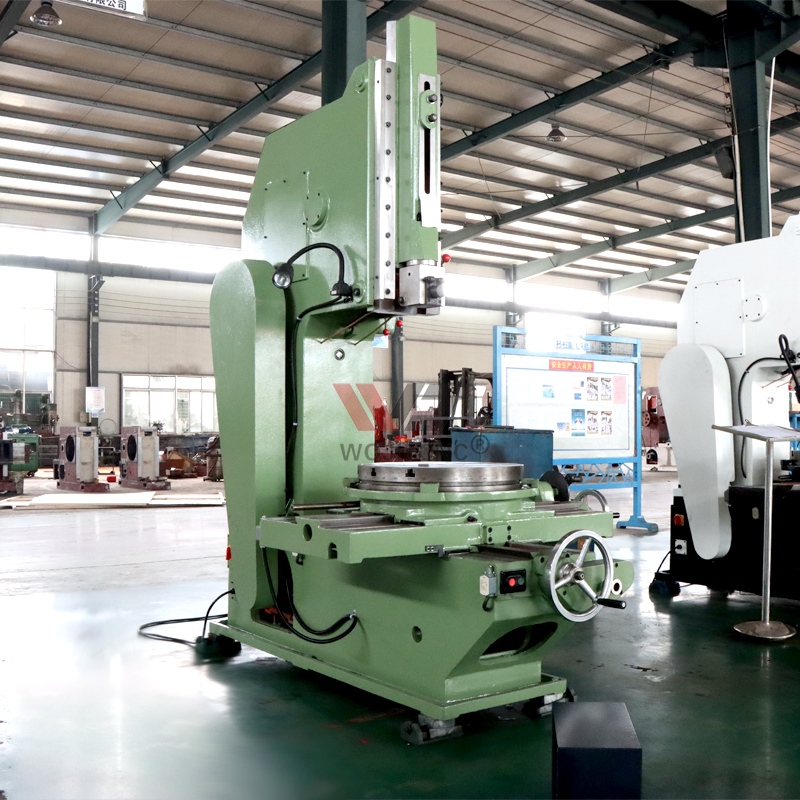
A slotting machine is a specialized vertical cutting tool designed primarily for creating keyways, slots, and internal grooves in metal workpieces with exceptional precision and repeatability. When comparing a slotting machine with traditional shaping or broaching equipment, the choice depends on your production volume, precision requirements, workpiece geometry, and cost considerations. Understanding how each tool performs for specific tasks is essential for optimizing your machining operations and achieving the best results for your manufacturing goals.
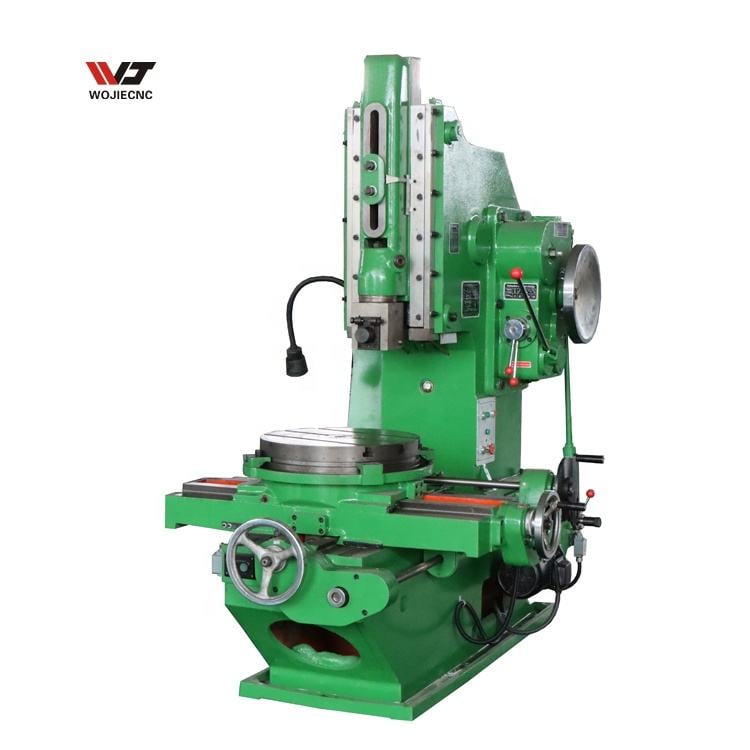
The slotting machine has become increasingly popular in modern manufacturing because it combines speed, accuracy, and consistency in a single operation. Unlike traditional shaping or broaching methods, a slotting machine offers distinct advantages for high-volume production runs where precision and efficiency matter most. This comprehensive comparison examines how each tool type performs across different machining scenarios, helping you select the right solution for your facility.
Core Differences Between Slotting Machine and Shaping Equipment
Operating Principle and Motion
A slotting machine employs a vertical reciprocating motion with a single-point cutting tool, allowing the cutting edge to move up and down while the workpiece remains stationary or moves incrementally. Shaping machines operate on a similar reciprocating principle but typically feature a horizontal stroke, making them suitable for external surface finishing and edge cutting tasks. The key distinction is that a slotting machine focuses on internal cavity creation, whereas a shaper excels at external profile work. Both tools use manual or semi-automatic feed mechanisms, but the slotting machine's vertical orientation provides superior control for deep, narrow keyways.
Precision and Surface Finish
When cutting internal slots and keyways, a slotting machine consistently delivers tighter tolerances than conventional shaping equipment because the tool path is purely vertical and the workpiece is rigidly clamped in a dedicated fixture. A slotting machine can achieve surface finishes as fine as 0.4 micrometers in production environments, which is critical for keyway applications where shaft interference and alignment depend on precision. Shaping machines, by contrast, are limited by their horizontal stroke geometry and tool vibration characteristics, typically producing surface finishes between 0.8 and 1.6 micrometers for comparable cuts.
Comparing Slotting Machine with Broaching Operations
Cutting Speed and Tool Life
Broaching machines operate by forcing a multi-tooth cutting tool through the workpiece in a single continuous motion, removing material progressively with each tooth. A slotting machine uses a single-point tool that makes multiple passes to achieve the desired depth, which means slower cutting speeds but significantly lower tool costs per operation. Broaching excels at high-volume production of identical slots because the entire cut occurs in one pass, reducing cycle time dramatically. However, a slotting machine's lower cost per tool change and simpler tool geometry make it economical for medium-volume runs, prototyping, and custom workpieces where broaching tool investment cannot be justified.
Workpiece Flexibility and Setup Time
A broaching machine requires custom broaching tools manufactured specifically for each slot profile, depth, and width combination, making tool fabrication a significant lead time and expense factor. A slotting machine can cut virtually any slot geometry using interchangeable single-point tools, allowing rapid changeover between different customer jobs and designs. For job shops and contract manufacturers, a slotting machine offers tremendous flexibility because the same machine handles keyways in shafts ranging from 10 millimeters to 200 millimeters in diameter without tool redesign. Broaching is only cost-effective when producing thousands of identical parts that justify the substantial upfront tooling investment.
Practical Application Scenarios and Task Suitability
High-Volume Production Runs
In high-volume scenarios requiring thousands of identical keyways, broaching equipment surpasses a slotting machine because the multi-tooth cutting action completes the entire slot in seconds per part. Once the custom broaching tool is manufactured and proven, the per-unit cost drops significantly, making broaching the most economical choice for automotive components, pump housings, and standardized industrial shafts. A slotting machine becomes less competitive in these applications because its slower per-part cutting time accumulates substantial labor costs over large production batches. However, for production runs between 100 and 1,000 pieces, a slotting machine often proves more cost-effective because the tooling lead time and expense are minimal.
Custom and Prototype Work
When customers require custom keyway profiles, non-standard slot widths, or one-off prototype components, a slotting machine is the superior choice because it eliminates expensive tool fabrication delays. A slotting machine can produce a precision keyway within hours of receiving customer drawings, whereas broaching would require weeks of tool design and manufacturing. Job shops and tool-and-die facilities rely heavily on slotting machines for this reason, as the equipment provides rapid turnaround and maximum flexibility. Shaping machines, meanwhile, lack the precision and repeatability needed for demanding keyway applications, making them unsuitable for critical tolerance work.
Complex Internal Geometries
A slotting machine handles complex internal geometries such as T-slots, dovetail slots, and multiple keyways in a single workpiece more effectively than broaching because the single-point tool can navigate intricate profiles with precise feed control. Broaching tools are inherently limited to linear geometries and cannot easily accommodate angular features or non-parallel slot arrangements. A shaping machine cannot reach deep internal cavities, making it entirely unsuitable for this class of work. For precision aerospace components, medical device parts, and specialized industrial equipment requiring intricate internal features, a slotting machine provides the necessary geometric flexibility and accuracy.
FAQ
What makes a slotting machine more cost-effective than broaching for small production volumes?
A slotting machine requires only simple, inexpensive single-point cutting tools that can be purchased off-the-shelf or custom-ground quickly and affordably. Broaching demands specialized multi-tooth tools that are expensive to design, fabricate, and validate, with lead times of several weeks. For production runs under 500 parts, the tooling cost advantage of a slotting machine far outweighs its slower per-part cycle time. Once you exceed 2,000 identical parts, broaching tooling investment becomes justified, and the single-pass cutting action delivers superior overall efficiency.
Can a slotting machine replace shaping equipment in modern manufacturing?
A slotting machine and shaping machine serve different primary functions; a slotting machine specializes in internal vertical slots and keyways, while shapers focus on external surfaces and horizontal profiles. Modern manufacturing has largely replaced shapers with CNC mills and planers for external work, but a slotting machine remains the preferred solution for internal keyway cutting because dedicated machines deliver better precision than multi-purpose equipment. For facilities with existing shaping machines, a slotting machine represents a targeted upgrade that improves accuracy and consistency specifically for keyway and slot operations.
What precision tolerances can a slotting machine achieve compared to broaching?
A slotting machine typically achieves tolerances of ±0.05 to ±0.10 millimeters for standard keyway cuts, matching or exceeding broaching precision under normal production conditions. Both tools can deliver these tolerances consistently when properly maintained and operated by skilled technicians. The practical advantage of a slotting machine is that tolerance performance remains consistent across different part designs because the tool path is mechanically identical for each stroke, whereas broaching performance depends heavily on custom tool design and accuracy.

