
 EN
EN



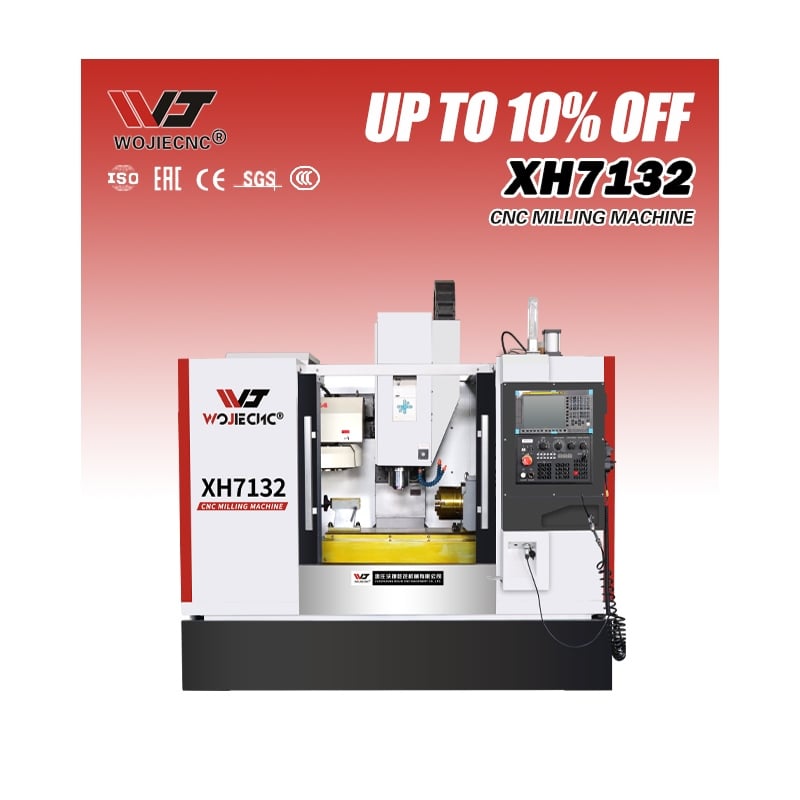
When manufacturers evaluate machining processes for high-volume or precision-critical production, repeatability becomes one of the most decisive factors. The question of whether cnc milling delivers better repeatability compared with conventional cutting is not merely academic — it directly affects part quality, scrap rates, production costs, and customer satisfaction. Understanding the structural differences between these two approaches is essential for any engineer or procurement decision-maker working in metal fabrication, aerospace, automotive, or industrial equipment manufacturing.
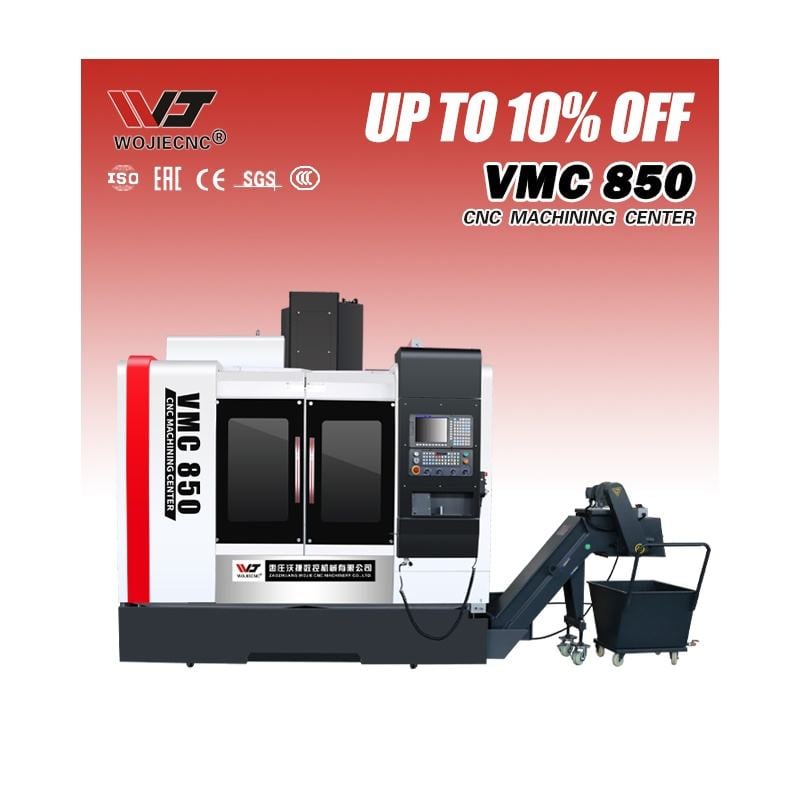
The short answer is yes — cnc milling consistently outperforms conventional cutting in terms of repeatability, and the reasons are deeply rooted in how each process controls motion, toolpaths, and material removal. However, the full picture involves understanding what repeatability actually means in a machining context, where conventional cutting still holds practical value, and what conditions allow cnc milling to deliver its maximum precision advantage. This article examines all of those dimensions in detail.
Understanding Repeatability in Machining
What Repeatability Means for Manufactured Parts
Repeatability in machining refers to the ability of a process to produce the same dimensional result across multiple parts or multiple production runs without manual recalibration. It is distinct from accuracy, which describes how close a single result is to the target value. A process can be accurate on the first part but fail to repeat that result on the hundredth. For industrial production, repeatability is often more commercially important than single-part accuracy.
In cnc milling, repeatability is governed by the machine's control system, servo motors, ball screws, and the rigidity of the spindle and worktable. These mechanical and electronic systems work together to execute the same programmed toolpath with minimal deviation across every cycle. The tolerance window for modern cnc milling centers typically falls within a few microns, and that window remains stable across thousands of parts when the machine is properly maintained.
Conventional cutting, by contrast, relies heavily on the operator's physical skill, manual feed rates, and visual or tactile feedback. Even a highly experienced machinist cannot replicate hand-controlled movements with the same precision as a servo-driven axis. This is not a criticism of skilled labor — it is simply a mechanical reality that human motor control introduces variability that digital control systems do not.
How Variability Enters the Conventional Cutting Process
In conventional milling or manual turning, variability enters the process through multiple channels simultaneously. Feed rate inconsistency is one of the most common sources — a machinist applying manual feed pressure will naturally vary the rate slightly from pass to pass, which changes chip load, surface finish, and final dimension. Over a long production run, these small variations accumulate into measurable dimensional spread.
Tool positioning is another critical variable. When a conventional machine operator sets up a new part or repositions a workpiece, the reference point must be re-established manually. Even with careful use of dial indicators and edge finders, the setup tolerance in conventional cutting is typically wider than what cnc milling achieves through its automatic work offset and probing systems. Each manual setup introduces a small but real positional uncertainty.
Operator fatigue also plays a role over extended shifts. The quality of cuts produced in the first hour of a shift may differ measurably from those produced in the eighth hour, not because of any change in machine condition, but because human attention and physical consistency naturally decline over time. cnc milling eliminates this variable entirely by executing the same program with the same mechanical precision regardless of shift duration.
The Mechanical Basis of CNC Milling Repeatability
Closed-Loop Control and Positional Feedback
The repeatability advantage of cnc milling is fundamentally a product of closed-loop control architecture. In a closed-loop system, the machine's controller continuously monitors the actual position of each axis using encoders and compares that position to the commanded position. Any deviation triggers an immediate correction signal to the servo motor. This feedback loop operates hundreds or thousands of times per second, keeping the toolpath execution extremely close to the programmed intent.
This architecture means that cnc milling does not simply command a movement and hope it arrives correctly — it verifies and corrects in real time. The result is that positional errors caused by thermal expansion, mechanical backlash, or load variation are continuously compensated rather than allowed to accumulate. Over a production run of hundreds or thousands of parts, this continuous correction is what maintains dimensional consistency at a level that manual processes cannot match.
Modern cnc milling centers also incorporate backlash compensation and pitch error compensation in their control software. These features map the known mechanical imperfections of the machine's drive system and apply corrective offsets automatically. The machine effectively knows its own limitations and accounts for them in every move, which further tightens the repeatability window beyond what the raw mechanical hardware would otherwise achieve.
Program-Driven Consistency Across Production Runs
One of the most practically significant repeatability advantages of cnc milling is that the machining program itself is a permanent, reusable asset. Once a part program has been proven and validated, it can be recalled and executed identically weeks, months, or years later. The toolpaths, feed rates, spindle speeds, depth of cut, and tool change sequences are all stored digitally and reproduced exactly on every run.
In conventional cutting, re-running a job after a period of time requires the operator to reconstruct the setup from documentation, memory, or physical templates. Even with detailed setup sheets, the reconstruction introduces variability. The first few parts of a re-run job on a conventional machine are often treated as trial pieces, whereas cnc milling can typically produce conforming parts from the very first cycle of a re-run.
This program-driven consistency also extends to multi-machine environments. The same validated program can be transferred to another cnc milling center of the same model and produce parts within the same tolerance band, enabling flexible capacity allocation across a shop floor. Conventional cutting cannot replicate this because the process is tied to individual operator skill rather than a transferable digital instruction set.
Where Conventional Cutting Still Has Practical Value
Low-Volume and One-Off Prototype Work
Despite the clear repeatability advantage of cnc milling, conventional cutting retains genuine practical value in specific production contexts. For one-off prototype work or very low-volume jobs where programming time would exceed the actual cutting time, a skilled machinist on a conventional machine can often deliver a finished part faster and at lower cost. The setup overhead of cnc milling — writing and proving the program, setting tool offsets, running a dry cycle — is a fixed cost that must be amortized across the production volume.
When a single part is needed quickly and the dimensional tolerances are moderate, conventional cutting can be the more economical choice. The repeatability advantage of cnc milling only becomes commercially significant when the same part must be produced multiple times to the same specification. For truly one-off work, repeatability is not a relevant criterion, and the flexibility of manual operation can be an asset.
Secondary Operations and Fixturing Adjustments
Conventional cutting also remains useful for secondary operations that are difficult to program efficiently, such as minor deburring passes, custom chamfering on irregular geometry, or fitting adjustments on assemblies. An experienced machinist can make judgment-based cuts that respond to the actual condition of the part in front of them, which is something a cnc milling program cannot do without sensor feedback or adaptive control features.
In repair and maintenance machining, where worn or damaged parts must be restored to function rather than produced to a new drawing, conventional cutting often provides the tactile feedback and real-time adaptability that the situation demands. The machinist can feel tool engagement, listen to cutting sounds, and adjust in ways that a fixed program cannot. These scenarios represent the genuine strengths of conventional cutting rather than areas where it competes with cnc milling on repeatability.
Repeatability Across Materials and Geometries
How Material Properties Affect Repeatability in Each Process
Material behavior during cutting introduces another dimension to the repeatability comparison. Hard materials like hardened steel or titanium alloys generate significant cutting forces that can deflect tooling and workholding. In cnc milling, these forces are managed through programmed feed rate and depth-of-cut parameters that remain constant across every part. The machine applies the same controlled engagement regardless of operator fatigue or attention level.
In conventional cutting of hard materials, the operator must continuously manage cutting forces through manual feed control. As the operator tires or as tool wear progresses, the tendency to reduce feed rate or take lighter cuts increases, which changes the chip load and can alter the final dimension. cnc milling maintains the programmed parameters until a tool change is commanded, producing more consistent results across the full tool life cycle.
For softer materials like aluminum or brass, the repeatability gap between cnc milling and conventional cutting narrows somewhat, because these materials are more forgiving of feed rate variation and generate lower cutting forces. However, even in aluminum machining, cnc milling delivers tighter dimensional consistency on features like bored holes, milled pockets, and contoured surfaces where toolpath geometry is complex and multi-axis coordination is required.
Complex Geometry and Multi-Axis Repeatability
The repeatability advantage of cnc milling becomes most pronounced when the part geometry involves complex contours, compound angles, or features that require coordinated multi-axis motion. Producing a curved surface or a helical feature on a conventional machine requires the operator to simultaneously control multiple handwheels or use specialized attachments, introducing compounded variability from each axis of motion.
cnc milling handles multi-axis coordination through interpolation algorithms in the controller, which calculate the precise simultaneous motion of each axis needed to follow the programmed path. The result is that complex geometry is produced with the same repeatability as simple geometry — the machine does not find curved surfaces harder to repeat than flat ones. This is a fundamental capability difference that makes cnc milling the only practical choice for high-volume production of complex precision parts.
Four-axis and five-axis cnc milling centers extend this advantage further by enabling the machining of undercuts, compound angles, and turbine-blade-style geometries in a single setup. Each additional axis of coordinated motion would represent an exponential increase in manual complexity on a conventional machine, but in cnc milling, the additional axes are simply additional channels of the same closed-loop control system, maintaining the same repeatability standard throughout.
Business and Quality Implications of Choosing CNC Milling
Scrap Rate, Rework Cost, and Process Capability
The repeatability advantage of cnc milling translates directly into measurable business outcomes. Lower dimensional variation means fewer parts fall outside tolerance, which reduces scrap rates and rework labor. In high-volume production, even a small reduction in scrap percentage can represent significant material and labor savings over a production year. The process capability indices — Cp and Cpk — that quality systems use to evaluate manufacturing processes are directly driven by the variation that repeatability controls.
cnc milling processes with well-maintained machines and validated programs routinely achieve Cpk values above 1.33, which is the threshold most automotive and aerospace customers require for production approval. Conventional cutting processes rarely achieve this level of statistical process capability on tight-tolerance features because the human variability component is too large to control within the required window. This is why industries with strict quality requirements have largely transitioned to cnc milling for precision component production.
Documentation, Traceability, and Customer Confidence
cnc milling also supports quality documentation in ways that conventional cutting cannot easily match. The program number, revision level, tool offsets, and machine parameters used to produce a batch of parts can be recorded and archived alongside the inspection data. If a quality issue arises weeks or months later, the production conditions can be reconstructed from the records, enabling root cause analysis and corrective action.
For customers in regulated industries — medical devices, aerospace, defense, automotive — this traceability is not optional. It is a contractual and regulatory requirement. cnc milling's digital process definition makes traceability straightforward, while conventional cutting's reliance on operator skill makes it difficult to document the process in sufficient detail to satisfy these requirements. The repeatability of cnc milling is therefore not just a technical advantage but a commercial enabler for accessing quality-sensitive markets.
FAQ
Is cnc milling always more repeatable than conventional cutting for every type of part?
For most production scenarios involving multiple identical parts, cnc milling delivers superior repeatability. The exception is truly one-off work where the programming overhead is not justified, or simple secondary operations where manual adjustment is more practical. For any job requiring consistent dimensional results across multiple parts, cnc milling is the more reliable choice.
How does tool wear affect the repeatability of cnc milling compared with conventional cutting?
Tool wear affects both processes, but cnc milling manages it more systematically. Tool life management systems in cnc milling track cutting time or part count and trigger tool changes at defined intervals, ensuring that dimensional drift from wear is controlled. In conventional cutting, the decision to change a tool is more subjective and operator-dependent, which can allow wear-related dimensional drift to go undetected longer.
Can conventional cutting achieve the same tolerances as cnc milling with a skilled enough operator?
A highly skilled machinist can achieve tight tolerances on individual parts using conventional cutting, and in some cases can match the accuracy of cnc milling on a single part. However, sustaining that tolerance across a production run of many parts is where conventional cutting falls short. The repeatability — not just the single-part accuracy — is where cnc milling holds a structural advantage that skill alone cannot overcome.
What maintenance practices are most important for preserving cnc milling repeatability over time?
Maintaining cnc milling repeatability over the machine's service life requires regular attention to spindle bearing condition, ball screw preload, guideway lubrication, and thermal compensation calibration. Periodic backlash and pitch error re-measurement ensures that the machine's compensation tables remain accurate. Coolant system maintenance also matters, as thermal stability of the machine structure directly affects dimensional consistency across long production runs.
Table of Contents
- Understanding Repeatability in Machining
- The Mechanical Basis of CNC Milling Repeatability
- Where Conventional Cutting Still Has Practical Value
- Repeatability Across Materials and Geometries
- Business and Quality Implications of Choosing CNC Milling
-
FAQ
- Is cnc milling always more repeatable than conventional cutting for every type of part?
- How does tool wear affect the repeatability of cnc milling compared with conventional cutting?
- Can conventional cutting achieve the same tolerances as cnc milling with a skilled enough operator?
- What maintenance practices are most important for preserving cnc milling repeatability over time?

