
 EN


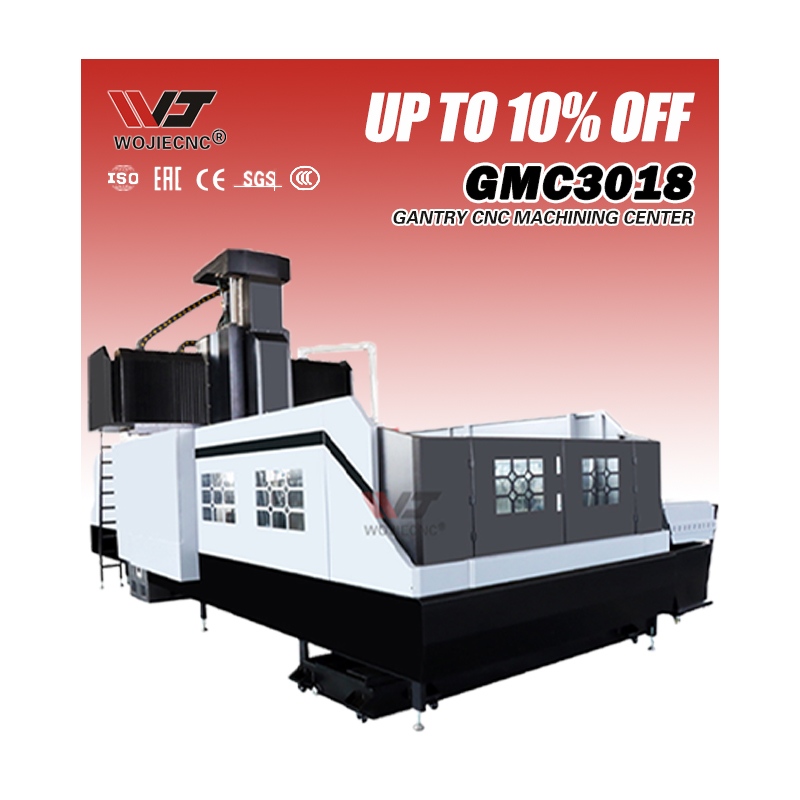
Manufacturing complex parts has always demanded precision, patience, and skilled operators working long hours to achieve tight tolerances. The challenge intensifies when production deadlines tighten and part complexity increases beyond what traditional machine tools can efficiently handle. A CNC gantry machining center fundamentally transforms this landscape by combining rigid structure, multi-axis capability, and automated precision to slash machining time while maintaining superior surface finishes and dimensional accuracy.

Understanding how a CNC gantry machining center reduces machining time requires examining the technological advantages that set this equipment apart from conventional mills and turning centers. The gantry architecture provides exceptional rigidity, multi-axis simultaneous motion, and the ability to process complex geometries in single setups. These characteristics directly translate into fewer tool changes, reduced part handling, minimized setup transitions, and dramatically shorter cycle times for intricate industrial components.
Rigid Gantry Structure and Machine Stability
Foundation of High-Speed Precision
The structural rigidity of a CNC gantry machining center distinguishes it from conventional vertical mills and smaller machining platforms. The C-frame or box-beam gantry design distributes cutting forces across a larger footprint, minimizing deflection and vibration even under aggressive cutting parameters. This superior stiffness allows operators to maintain higher spindle speeds and feed rates without sacrificing surface finish or accuracy, directly reducing the time required to remove material from each workpiece.
When a CNC gantry machining center operates with minimal spindle runout and thermal expansion, the machine can execute faster passes and heavier cuts. Complex parts that traditionally required multiple lighter passes on smaller mills can be completed in fewer, more aggressive operations. The stability also enables consistent tool life, reducing unexpected breakage and unplanned downtime that would otherwise extend overall machining time.
Impact on Dimensional Control
Rigid construction in a CNC gantry machining center ensures that dimensional consistency remains high across large production runs. Reduced chatter and vibration mean tighter control over feature positioning and surface quality, which minimizes rework and scrap. Parts that meet specifications on the first run avoid secondary finishing operations, inspection loops, and corrective cycles that add hidden time to the manufacturing timeline.
Multi-Axis Simultaneous Motion Capability
Consolidating Operations into Single Setups
A CNC gantry machining center typically features four to five axes of simultaneous motion, enabling complex geometries to be machined without repositioning the workpiece. This capability is transformative for intricate parts with features on multiple faces, angled surfaces, and pockets at various orientations. Instead of programming separate setup operations on a three-axis mill, a CNC gantry machining center can complete all feature machining in one continuous program, eliminating setup time, part reclamping, and datum reestablishment.
The efficiency gain from consolidating multiple setups into a single machining cycle cannot be overstated. Each setup transition on traditional machines requires fixturing adjustment, tool offsetting, coordinate system reestablishment, and operator verification. A CNC gantry machining center collapses these repetitive steps by holding the workpiece stationary while the spindle and axes move in coordinated paths to access all required surfaces sequentially.
Reducing Tool Changes and Non-Productive Time
Complex parts often demand dozens of different tools—drills, mills, taps, and specialized cutters—to complete all features. A CNC gantry machining center accommodates large automatic tool changers that can store hundreds of tools, reducing the frequency of manual tool installation and verification. The machine retrieves each required tool automatically, measuring it, and offsetting the tool path within seconds. For a CNC gantry machining center processing intricate components, this automation saves significant cumulative time compared to manual tool management on older equipment.
Advanced Control Systems and Optimized Toolpath Generation
Intelligent Feedrate Management
Modern CNC gantry machining center control systems incorporate adaptive feedrate algorithms that optimize cutting conditions in real time. These systems monitor spindle load, vibration, and temperature, automatically adjusting feed rates to maintain aggressive material removal within safe cutting parameters. A CNC gantry machining center operator or programmer can set target feedrates based on tool and material capabilities, and the control system maintains these optimal rates throughout the entire program, preventing bottlenecks where the machine slows excessively for conservative safety margins.
High-speed machining strategies further enhance productivity in a CNC gantry machining center. Smaller stepover distances, rapid helical interpolation for pockets, and optimized ramping entry moves reduce stress on tools and machine structure while enabling higher speeds. These toolpaths keep the spindle under consistent load, eliminating hesitation and acceleration delays that add time to traditional programs.
CAM Software Integration
Computer-aided manufacturing software now generates highly optimized toolpaths specifically designed for CNC gantry machining center capabilities. Advanced CAM packages simulate the complete machining cycle, identifying potential collisions, optimizing tool motion through space, and reducing rapid traverse distances. A CNC gantry machining center programmed with AI-enhanced toolpaths can complete part manufacturing in a fraction of the time required by conventionally programmed machines, because the software continuously searches for efficiency gains across the entire operation.
Practical Machining Time Reductions for Complex Parts
Real-World Performance Gains
Industrial users report that a CNC gantry machining center reduces cycle time by 40 to 60 percent on complex aerospace castings, automotive engine blocks, and die components compared to conventional mills. These reductions stem directly from the combined advantages of rigid structure, multi-axis capability, and automated tool management. A part requiring 8 hours on a traditional three-axis vertical mill might complete in 3 to 4 hours on a CNC gantry machining center, assuming equivalent tooling and programming optimization.
The time savings grow more dramatic when parts demand five-axis operations or intricate cavity work that would otherwise require multiple machines and operator intervention. A CNC gantry machining center's ability to tilt the spindle or rotate the workpiece in controlled ways means that complex undercuts, angled holes, and sculptured surfaces are machined in optimized orientations, with every axis contributing to material removal rather than fighting against the geometry.
Secondary Benefit: Reduced Setup and Changeover Time
Beyond the actual cutting cycle, a CNC gantry machining center dramatically reduces the human effort required before and after machining. Large workpieces can be mounted once and secured for the entire program, eliminating multiple clamping adjustments. The machine's repeatability means that subsequent parts in a batch require minimal re-offsetting; the CNC gantry machining center's control system applies learned offsets and adaptive corrections automatically, shrinking the gap between part one and part fifty in a production run.
FAQ
How much faster is a CNC gantry machining center compared to a manual mill?
A CNC gantry machining center typically delivers 5 to 10 times faster cycle times than manual mills on complex parts because it eliminates human-paced setup, tool changes, and repositioning. For simple parts, the advantage is smaller; for intricate geometries requiring multiple setups on a manual machine, the time gap widens significantly.
Can a CNC gantry machining center handle all types of complex parts?
A CNC gantry machining center excels at milling, drilling, boring, and tapping operations on large castings, forgings, and structural components. It is less suited for turning operations or parts requiring extreme precision beyond its thermal stability range. Material, part size, and feature complexity determine whether a CNC gantry machining center is the optimal choice versus alternative processes.
What skills do operators need to maximize CNC gantry machining center productivity?
Operators and programmers must understand CNC programming, tooling selection, and optimization strategies to fully leverage a CNC gantry machining center. Knowledge of the machine's capabilities, control system features, and CAM integration allows skilled teams to identify time-saving opportunities and implement advanced strategies that standard programming overlooks.

