CNC Horizontal Lathe: Precision Manufacturing Solutions for Advanced Machining Applications

Get a Free Quote

Our representative will contact you soon.
Email
Mobile/WhatsApp
Name
Company Name
Message
0/1000

cnc horizontal lathe

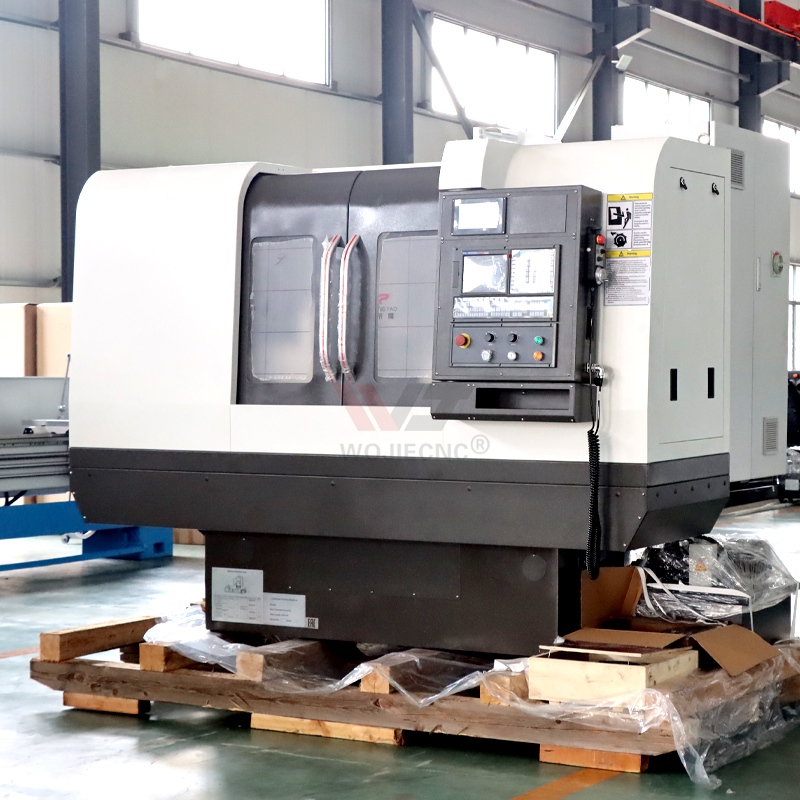
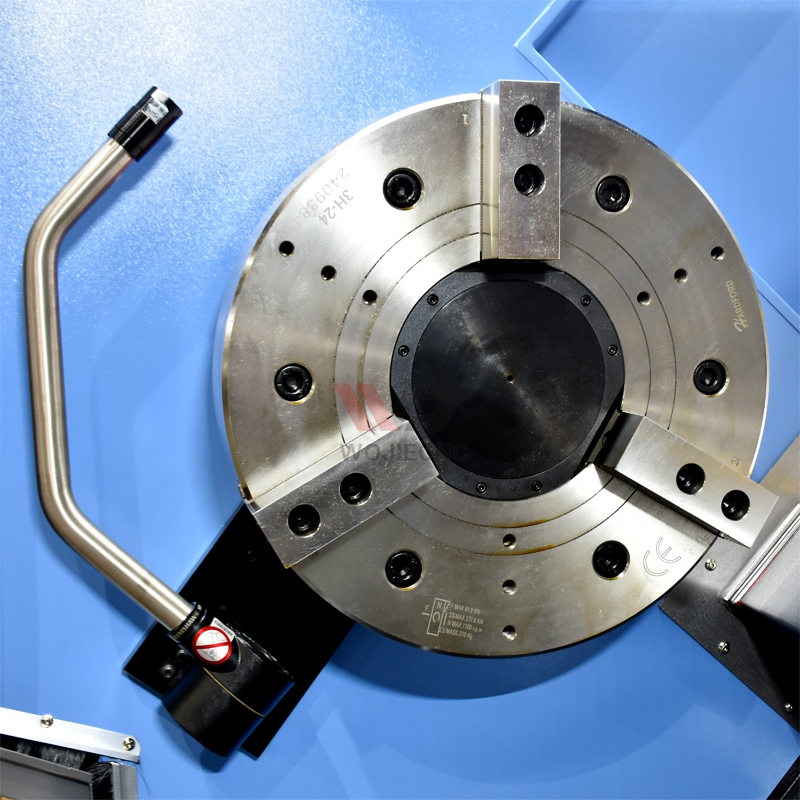
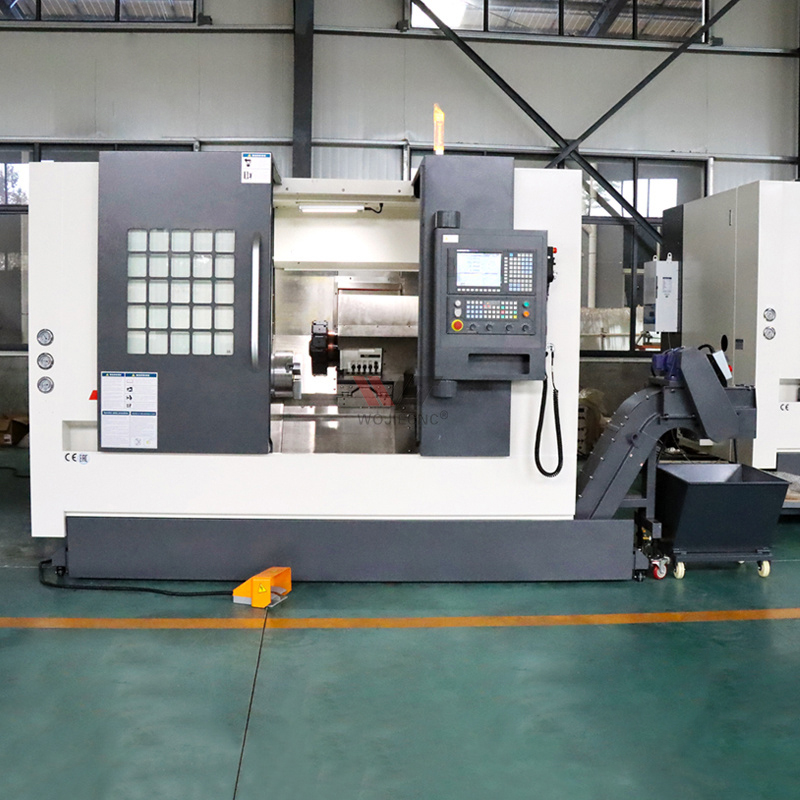
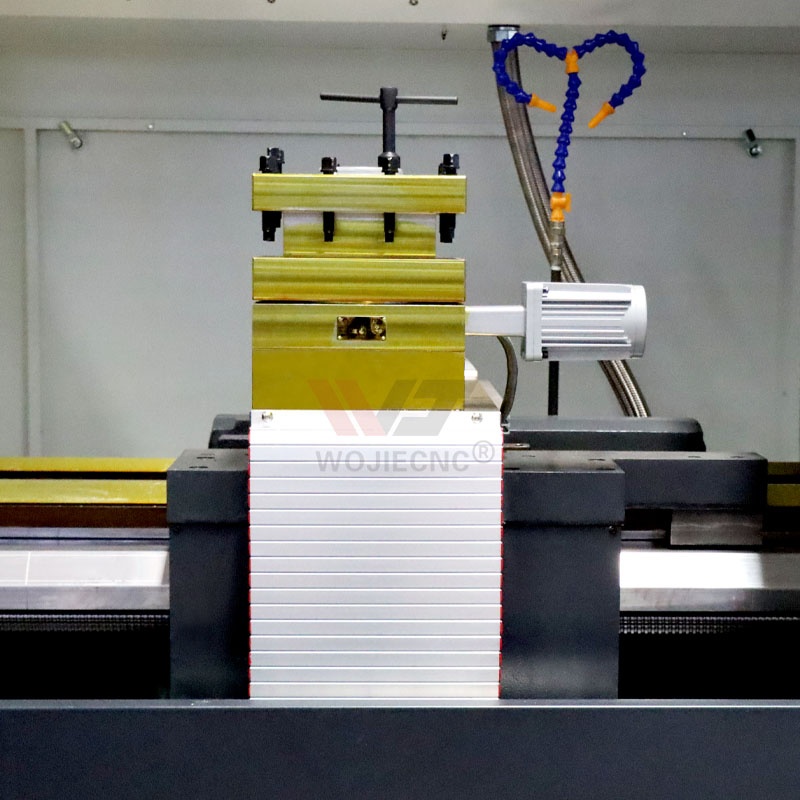
A CNC horizontal lathe represents a sophisticated manufacturing machine that revolutionizes precision machining operations across various industries. This computer-controlled equipment operates with the spindle positioned horizontally, allowing workpieces to rotate around a horizontal axis while cutting tools move in predetermined patterns to shape materials with exceptional accuracy. The CNC horizontal lathe integrates advanced computerized controls with traditional lathe mechanics, enabling operators to program complex machining sequences that execute automatically with minimal human intervention. The primary function of this machine centers on turning operations, where cylindrical workpieces undergo precise material removal to achieve desired dimensions, surface finishes, and geometric tolerances. Modern CNC horizontal lathes feature multiple-axis capabilities, allowing simultaneous movement in various directions to create intricate components efficiently. The technological foundation includes servo motors, linear guides, ball screws, and sophisticated feedback systems that ensure positioning accuracy within micrometers. These machines accommodate diverse materials ranging from soft metals like aluminum to hardened steels and exotic alloys used in aerospace applications. The horizontal configuration provides excellent chip evacuation, reducing heat buildup and maintaining cutting tool longevity during extended production runs. Advanced CNC horizontal lathes incorporate tool changers, enabling automatic selection from multiple cutting implements without operator intervention. The programming interface utilizes G-code and M-code languages, allowing engineers to define cutting paths, speeds, feeds, and coolant functions precisely. Applications span automotive component manufacturing, aerospace part production, medical device fabrication, and general machining operations requiring high precision and repeatability. Industries rely on CNC horizontal lathes for producing shafts, bushings, flanges, and complex rotational components that demand tight tolerances and superior surface quality.

New Products

CNC horizontal lathe technology delivers substantial benefits that transform manufacturing operations and enhance productivity across diverse industrial applications. These machines provide exceptional precision control, maintaining tolerances within 0.0001 inches consistently throughout production runs, eliminating variations common in manual machining processes. The automated operation reduces labor costs significantly by allowing single operators to manage multiple machines simultaneously while maintaining consistent quality standards. Programming capabilities enable manufacturers to store and recall machining sequences instantly, reducing setup times from hours to minutes when switching between different products. The horizontal spindle configuration offers superior workpiece support, particularly beneficial when machining long shafts or heavy components that might deflect under their own weight in vertical setups. Chip evacuation occurs naturally through gravity assistance, preventing chip buildup that could damage finished surfaces or interfere with cutting operations. Modern CNC horizontal lathes feature adaptive controls that automatically adjust cutting parameters based on material feedback, optimizing tool life and surface finish quality without operator intervention. The enclosed design enhances operator safety by containing cutting fluids, chips, and rotating components while reducing noise levels in manufacturing environments. Energy efficiency improvements result from optimized motor controls and regenerative braking systems that recover energy during deceleration cycles. Quality assurance benefits include integrated measurement systems that verify dimensions during machining, catching errors before parts reach final inspection stages. Production flexibility allows manufacturers to handle small batch runs economically while maintaining the capability for high-volume production when demand increases. The digital interface simplifies operator training, reducing the learning curve associated with traditional manual lathes and enabling faster workforce development. Maintenance requirements decrease through condition monitoring systems that predict component wear and schedule servicing before failures occur. Remote monitoring capabilities enable supervisors to track machine performance, utilization rates, and production metrics from central locations, improving overall facility management efficiency.

Practical Tips

Zaozhuang Wojie CNC Machinery Co., Ltd.: 30+ Years of CNC Mastery, Your Global Trusted Partner

03

Nov

Zaozhuang Wojie CNC Machinery Co., Ltd.: 30+ Years of CNC Mastery, Your Global Trusted Partner

View More
Wojie CNC Shines at International Machine Tool Exhibitions: Forging Global Partnerships with CNC Expertise

30

Oct

Wojie CNC Shines at International Machine Tool Exhibitions: Forging Global Partnerships with CNC Expertise

View More
Wojie CNC Hot-Selling Machines: Full-Scene Precision Machining Solutions for Global Manufacturers

30

Oct

Wojie CNC Hot-Selling Machines: Full-Scene Precision Machining Solutions for Global Manufacturers

View More

Get a Free Quote

Our representative will contact you soon.
Email
Mobile/WhatsApp
Name
Company Name
Message
0/1000

cnc horizontal lathe

Advanced Multi-Axis Machining Capabilities

Advanced Multi-Axis Machining Capabilities

The CNC horizontal lathe delivers unprecedented machining versatility through its sophisticated multi-axis control system, enabling manufacturers to produce complex geometries that were previously impossible or extremely time-consuming with conventional equipment. This advanced capability stems from the integration of multiple servo-controlled axes working in perfect synchronization, typically including X-axis for radial movement, Z-axis for longitudinal travel, and often C-axis for spindle rotation positioning. The multi-axis functionality allows simultaneous cutting operations from different angles, dramatically reducing cycle times while maintaining superior surface finishes across all machined features. Manufacturers benefit from the ability to complete multiple operations in a single setup, eliminating the need for secondary machining processes that introduce potential alignment errors and increase production costs. The precision positioning system utilizes high-resolution encoders and advanced interpolation algorithms to ensure smooth motion profiles even during complex contouring operations. This technological advancement proves particularly valuable in aerospace and medical device manufacturing, where components feature intricate internal passages, varying wall thickness, and critical dimensional requirements that demand exceptional accuracy. The CNC horizontal lathe can execute live tooling operations, incorporating rotating cutting tools for milling, drilling, and tapping operations while the main spindle continues rotating, effectively combining lathe and machining center capabilities in a single platform. The advanced control system compensates for thermal expansion, tool wear, and machine deflection automatically, maintaining consistent part quality throughout extended production runs. Programming flexibility allows engineers to optimize cutting strategies for specific materials and geometries, maximizing productivity while minimizing tool consumption and cycle times. The multi-axis capability extends to complex interpolation between axes, enabling helical cutting paths for thread milling, spiral grooves, and other specialized features that enhance component functionality and performance in demanding applications.
Intelligent Tool Management System

Intelligent Tool Management System

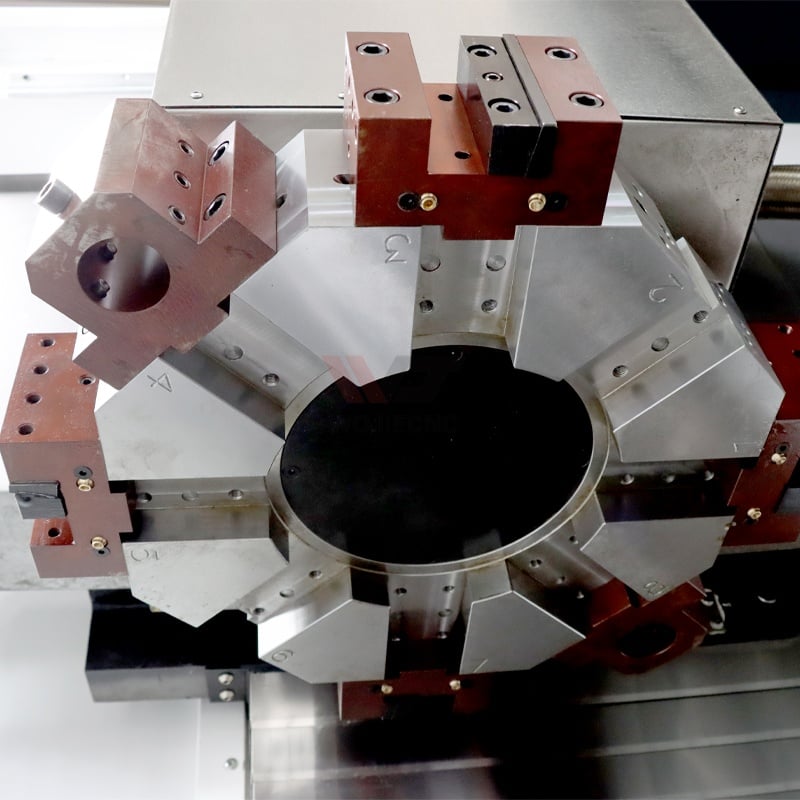
The revolutionary intelligent tool management system integrated into modern CNC horizontal lathes transforms manufacturing efficiency by automating tool selection, monitoring, and optimization processes that traditionally required extensive operator intervention and expertise. This comprehensive system incorporates automatic tool changers capable of housing dozens of cutting implements, each equipped with RFID identification tags that store detailed information about tool specifications, usage history, and performance characteristics. The intelligent management software continuously monitors cutting forces, vibration patterns, and surface finish quality to determine optimal cutting parameters for each tool and material combination. When tools reach predetermined wear limits or cutting performance degrades below acceptable thresholds, the system automatically selects replacement tools from the magazine, ensuring consistent part quality without production interruptions. The predictive maintenance algorithms analyze tool performance data to forecast replacement requirements, enabling proactive inventory management and reducing unexpected downtime costs. Advanced sensor integration monitors cutting temperatures, chip formation, and acoustic emissions to detect potential problems before they result in tool failure or part damage. The system maintains comprehensive databases of cutting parameters optimized for specific tool and material combinations, automatically adjusting speeds, feeds, and depth of cut based on real-time conditions. Tool life optimization features extend cutting implement longevity through adaptive control strategies that balance productivity with tool preservation, reducing overall tooling costs while maintaining production schedules. The intelligent system interfaces with enterprise resource planning software to track tool inventory, usage patterns, and replacement schedules across multiple machines and production lines. Operators benefit from simplified setup procedures, as the system automatically configures machining parameters based on programmed operations and available tooling, reducing programming time and minimizing the potential for human error during job preparation.
Precision Thermal Management and Environmental Control

Precision Thermal Management and Environmental Control

The sophisticated thermal management and environmental control systems integrated into premium CNC horizontal lathes ensure exceptional dimensional accuracy and surface quality by maintaining stable operating conditions regardless of ambient temperature variations or extended production cycles. These advanced systems recognize that thermal expansion represents one of the most significant factors affecting machining precision, with temperature variations of just a few degrees potentially causing dimensional errors that exceed acceptable tolerances for critical components. The comprehensive thermal management approach begins with strategic placement of temperature sensors throughout the machine structure, monitoring critical areas including spindle bearings, linear guides, ball screws, and the machine bed to detect thermal gradients before they affect part accuracy. Active cooling systems circulate precisely temperature-controlled coolant through integrated channels within the machine structure, maintaining uniform temperatures across all critical components during operation. The intelligent thermal compensation software utilizes real-time temperature data and sophisticated algorithms to calculate thermal expansion effects and automatically adjust machining coordinates to maintain part dimensions within specified tolerances. Environmental isolation features include fully enclosed machining areas with controlled atmosphere systems that regulate temperature, humidity, and air cleanliness to prevent external factors from affecting precision operations. The coolant management system maintains cutting fluid at optimal temperatures while filtering contaminants and monitoring chemical composition to ensure consistent lubrication and cooling performance throughout extended production runs. Advanced thermal modeling capabilities predict temperature variations based on machining parameters and ambient conditions, enabling proactive adjustments that prevent thermal-induced errors before they occur. The environmental control system extends to vibration isolation through specialized foundation designs and active damping systems that eliminate external disturbances that could affect surface finish quality or dimensional accuracy. These comprehensive thermal and environmental management features prove essential for applications requiring exceptional precision, such as aerospace components, medical implants, and high-performance automotive parts where even minor dimensional variations can compromise performance or safety requirements.
CNC Horizontal Lathe: Precision Manufacturing Solutions for Advanced Machining Applications

Get a Free Quote

Our representative will contact you soon.
Email
Mobile/WhatsApp
Name
Company Name
Message
0/1000
email goToTop