
 EN
EN



Modern manufacturing demands precision, speed, and the ability to handle intricate geometries that traditional machinery cannot achieve. A 5 axis CNC milling machine has become indispensable for industries requiring complex industrial parts with tight tolerances and sophisticated features. The reason is straightforward: a 5 axis CNC milling machine eliminates the need for multiple setups, reduces human error, and enables the creation of components that would be impossible or prohibitively expensive to produce using conventional methods. Understanding why a 5 axis CNC milling machine is essential requires examining its unique capabilities, operational advantages, and transformative impact on modern manufacturing workflows.
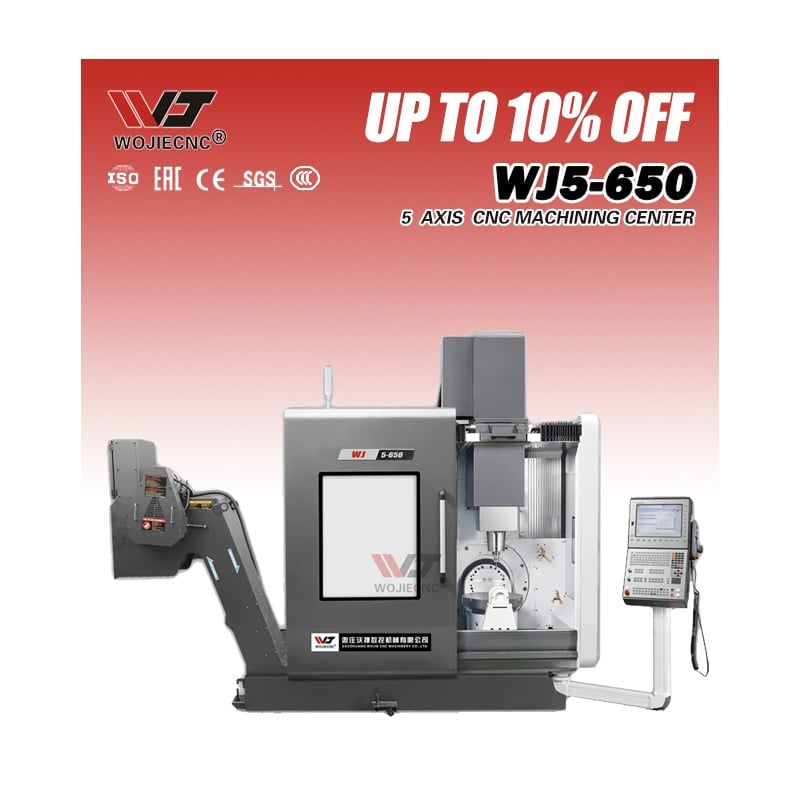
The complexity of modern industrial parts—from aerospace components to medical devices—has outpaced the capabilities of simpler machining solutions. A 5 axis CNC milling machine addresses these challenges by offering simultaneous motion along five different axes, allowing cutting tools to approach workpieces from virtually any angle. This multidirectional capability means manufacturers can produce intricate surfaces, undercuts, and compound geometries in a single setup, fundamentally changing how complex parts are conceived and manufactured.
How a 5 Axis CNC Milling Machine Enables Unprecedented Precision
Simultaneous Multi-Axis Motion and Geometric Freedom
A 5 axis CNC milling machine operates along three linear axes (X, Y, Z) plus two rotational axes, typically designated as A and B or B and C. This simultaneous multi-axis control means the cutting tool can approach any point on the workpiece from any angle without requiring manual repositioning. Unlike traditional three-axis machines that demand multiple part rotations or fixture changes, a 5 axis CNC milling machine maintains the part in one secure position, dramatically reducing setup time and eliminating errors introduced by repeated handling. The geometric freedom this provides is transformative—complex aerospace turbine blades, intricate automotive manifolds, and precision medical implants can be produced in single operations that would otherwise require dozens of setups on conventional equipment.
Reduced Surface Roughness and Tool Deflection
When cutting tools approach workpieces at optimal angles—which only a 5 axis CNC milling machine can achieve continuously—surface finish improves dramatically while tool deflection decreases. On a 5 axis CNC milling machine, the tool can maintain perpendicular contact with complex curves, maximizing cutting efficiency and minimizing vibration. This results in superior surface quality that often eliminates secondary finishing operations. Industries manufacturing critical components like turbopump housings, precision valve bodies, and medical implants rely on a 5 axis CNC milling machine specifically because this quality advantage is non-negotiable for product performance and regulatory compliance.
Essential Applications Where Complex Industrial Parts Demand 5 Axis Capability
Aerospace and Defense Manufacturing
Aerospace components represent perhaps the most demanding application for a 5 axis CNC milling machine. Engine casings, compressor housings, and fuel system components feature complex internal passages, precise blade seats, and compound surfaces that cannot be manufactured on simpler equipment. A 5 axis CNC milling machine enables manufacturers to produce these parts while maintaining the tight tolerances—often in the range of ±0.005 inches—that aerospace specifications demand. The certification requirements in aerospace manufacturing also favor a 5 axis CNC milling machine because the single-setup capability creates a clear, auditable manufacturing record that simplifies traceability and compliance documentation.
Medical Device and Precision Instrumentation Production
Medical device manufacturing requires exceptional precision combined with flexibility to accommodate frequent design iterations. A 5 axis CNC milling machine serves this market by enabling rapid prototyping and low-to-medium volume production of implants, surgical instruments, and diagnostic equipment housings. The ability to machine complex geometries—such as the intricate internal channels in orthopedic implants or the precision optical mounting surfaces in diagnostic instruments—makes a 5 axis CNC milling machine the preferred choice for manufacturers operating in this sector. Regulatory requirements in medical manufacturing further emphasize the value of a 5 axis CNC milling machine, as its comprehensive production record supports FDA validation and quality audits.
Why Single-Setup Manufacturing Transforms Production Economics
Elimination of Setup Time and Associated Costs
Traditional manufacturing of complex industrial parts often requires five to ten setup operations on different machine tools or fixtures. Each setup introduces labor costs, potential for orientation errors, and extended lead times. A 5 axis CNC milling machine consolidates these operations into a single setup, reducing manufacturing time by 40–60 percent for typical complex parts. Beyond direct labor savings, a 5 axis CNC milling machine minimizes the risk of scrap parts due to misalignment—a significant concern when complex parts must be repositioned multiple times. For manufacturers producing critical components where a single scrap part represents thousands of dollars in lost material and labor, the reliability advantage of a 5 axis CNC milling machine is profound.
Flexibility for Design Evolution and Custom Orders
Modern manufacturers increasingly receive requests for custom variations and design refinements. A 5 axis CNC milling machine excels in this environment because geometry changes can be accommodated through software modifications without requiring new fixtures or extensive setup recalibration. This flexibility means a 5 axis CNC milling machine supports both volume production and boutique manufacturing of specialized components. Industries like motorsports, where performance optimization drives constant design iteration, have come to depend on a 5 axis CNC milling machine for its ability to rapidly implement engineering changes while maintaining dimensional integrity across production runs.
Advanced Capabilities That Justify the 5 Axis CNC Milling Machine Investment
Simultaneous Surface Finishing and Precision Machining
The sophistication of modern a 5 axis CNC milling machine enables simultaneous roughing and finishing operations that would require separate machines in conventional manufacturing. Advanced CNC programming allows a 5 axis CNC milling machine to optimize tool paths for both material removal rate and surface quality in a single operation. This capability is particularly valuable for components like turbopump housings where internal surfaces must meet both tight dimensional tolerances and specific surface finish requirements. The result is faster production cycles and reduced dependence on secondary finishing equipment, making a 5 axis CNC milling machine an economically advantageous investment.
Vibration Control and Extended Tool Life
When tools maintain optimal cutting angles—which only a 5 axis CNC milling machine can sustain throughout complex paths—cutting forces remain balanced and vibration decreases substantially. This translates directly to extended tool life, as reduced vibration stress minimizes chipping and wear. A 5 axis CNC milling machine typically extends tool life by 25–40 percent compared to conventional machines attempting to machine complex parts through repeated setups. For manufacturers processing expensive materials like titanium or superalloys, this tool life advantage contributes significantly to overall production economics.
FAQ
What specific advantages does a 5 axis CNC milling machine offer over 3-axis machines for complex parts?
A 5 axis CNC milling machine enables single-setup manufacturing of parts requiring cutting from multiple angles, eliminating repositioning errors and setup time. This results in superior surface finish, tighter tolerances, and 40–60 percent faster production compared to multi-setup operations on 3-axis machines. For complex industrial parts with compound geometries, undercuts, or internal features, a 5 axis CNC milling machine transforms manufacturing feasibility from extremely difficult to straightforward.
Which industries benefit most from investing in a 5 axis CNC milling machine?
Aerospace, medical device, automotive, oil and gas, and precision instrumentation industries derive the greatest benefit from a 5 axis CNC milling machine. These sectors produce components with complex geometries, tight tolerances, and high reliability requirements where conventional machining cannot deliver competitive cost or quality. The aerospace industry particularly values a 5 axis CNC milling machine for compliance documentation and the ability to machine critical components within single audit-traceable operations.
How does a 5 axis CNC milling machine impact total production cost for complex components?
Though capital investment is higher, a 5 axis CNC milling machine reduces total production cost through fewer setups, extended tool life, reduced scrap rates, and faster lead times. For complex industrial parts, single-setup manufacturing on a 5 axis CNC milling machine often decreases per-unit costs by 30–50 percent compared to multi-setup conventional manufacturing. The economic advantage becomes even more pronounced for components manufactured in medium volumes where setup efficiency significantly impacts overall profitability.

