
 EN
EN



Long-shaft machining presents unique challenges in modern manufacturing. Parts that exceed standard bed lengths require specialized equipment designed to handle extended workpieces while maintaining precision and stability. A flat bed CNC lathe addresses these challenges directly by providing a robust platform specifically engineered for reliable machining of long-shaft components. Understanding how a flat bed CNC lathe delivers this reliability helps manufacturers optimize their production processes and achieve consistent quality across extended part geometries.
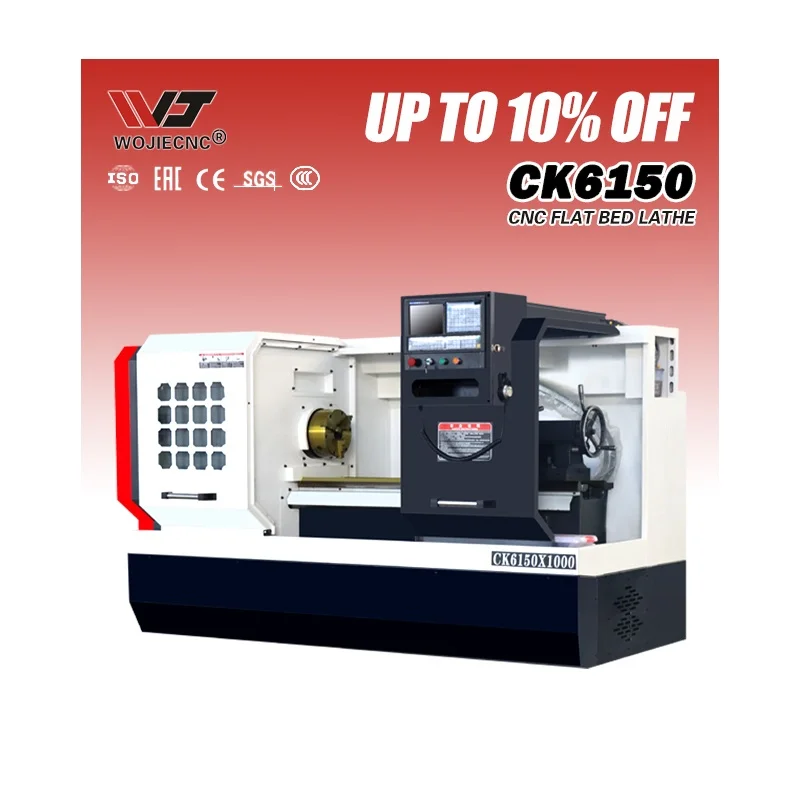
A flat bed CNC lathe fundamentally differs from vertical or compact designs in its structural approach to supporting long workpieces. The extended horizontal bed platform minimizes deflection under cutting forces, ensuring that a flat bed CNC lathe maintains dimensional accuracy from the first cut through the final operation. This design philosophy makes the flat bed CNC lathe the preferred choice for aerospace, automotive, and industrial applications requiring precision long-shaft production.
Structural Stability and Long-Shaft Support
Extended Bed Platform Design
The foundation of reliable long-shaft machining lies in the bed structure itself. A flat bed CNC lathe incorporates a rigid, extended platform that spans the entire length of the workpiece, preventing cantilever loading that would otherwise cause deflection. Unlike compact lathes where overhung length creates vibration and inaccuracy, a flat bed CNC lathe distributes support evenly, allowing cutting forces to be absorbed across the full bed length. This extended support capability is why a flat bed CNC lathe consistently outperforms other configurations when machining parts exceeding 500mm in length.
Tailstock and Steady Rest Integration
A flat bed CNC lathe typically features multiple support points along the workpiece, including precision tailstock assemblies and optional steady rests. These secondary supports act as intermediate bracing points, reducing vibration and preventing bow or deflection in the middle sections of long shafts. By using a flat bed CNC lathe with coordinated tailstock positioning and steady rest placement, operators can maintain tight tolerances on parts that would be impossible to hold concentrically on shorter equipment. The flat bed CNC lathe architecture accommodates these additional supports without compromising chuck access or tool clearance.
Precision and Accuracy Through Rigid Design
Spindle Runout and Concentricity Control
Long-shaft components demand exceptional spindle stability because even minor runout becomes magnified over extended workpiece lengths. A flat bed CNC lathe addresses this through precision spindle bearings and a rigid spindle housing that maintains concentricity within micrometers. When a flat bed CNC lathe operates at controlled speeds matched to workpiece geometry, the spindle runout remains consistent, delivering uniform cutting conditions along the entire shaft length. This precision is particularly critical for applications like drive shafts, pump shafts, and precision tool holders where wobble or runout would cause functional failure or unacceptable surface finish.
Tool Path Accuracy and Surface Finish
The rigid foundation of a flat bed CNC lathe enables CNC systems to execute precise tool paths without compensating for deflection or vibration. Feed rates and spindle speeds programmed into a flat bed CNC lathe remain consistent because the machine structure maintains its intended geometry under cutting loads. This consistency translates to predictable surface finishes, repeatable dimensional accuracy, and reduced tool wear across production runs. Manufacturers relying on a flat bed CNC lathe can achieve surface roughness values of Ra 0.4 to 0.8 micrometers on long shafts, meeting the exacting requirements of precision assemblies.
Thermal Management and Long-Run Production Stability
Coolant Circulation and Heat Dissipation
Extended cutting operations on long-shaft parts generate significant heat that must be managed to prevent thermal expansion and loss of precision. A flat bed CNC lathe incorporates centralized coolant delivery systems that flood the cutting zone continuously, evacuating heat immediately and maintaining stable workpiece temperature. The flat bed CNC lathe design allows coolant to flow along the entire bed length, ensuring that long shafts experience uniform temperature conditions. When a flat bed CNC lathe operates with adequate flow rates and coolant management, thermal drift remains minimal, and dimensional stability persists from the first cut through the final finishing pass.
Thermal Growth Compensation Strategies
Even with excellent coolant management, prolonged machining can cause minor thermal growth in spindle housings and bed structures. Modern flat bed cnc lathe systems incorporate thermal compensation algorithms that monitor spindle temperature and adjust offsets automatically. The flat bed CNC lathe computer control reads sensor data and predicts thermal growth patterns, making real-time corrections that maintain dimensional accuracy despite extended runtime. This adaptive capability ensures that a flat bed CNC lathe produces the final parts to specification even after six, eight, or ten-hour production cycles.
Practical Applications and Production Benefits
Industry-Specific Long-Shaft Requirements
A flat bed CNC lathe serves diverse industries where long-shaft components are critical. In aerospace manufacturing, a flat bed CNC lathe produces landing gear shafts, hydraulic cylinders, and precision spindles where runout tolerance might be 0.05mm or less over 1200mm length. In automotive production, a flat bed CNC lathe handles transmission shafts, output shafts, and jackshaft components that demand consistent hardness gradients and surface finish. The flat bed CNC lathe's ability to support long parts while maintaining precision makes it the standard choice for these demanding applications.
Production Efficiency and Tool Optimization
A flat bed CNC lathe maximizes production efficiency by enabling multiple operations in a single setup. Because the machine maintains rigidity over the entire workpiece length, operators can rough, semi-finish, and finish long shafts without intermediate repositioning or secondary equipment. The flat bed CNC lathe's extended capacity reduces setup time, minimizes part handling, and lowers overall production cost. Modern a flat bed CNC lathe systems integrate chip conveyors, automated tool changers, and CNC programming that optimize cutting parameters automatically, reducing cycle time while maintaining the reliability that long-shaft customers demand.
FAQ
What makes a flat bed CNC lathe better than a vertical lathe for long shafts?
A flat bed CNC lathe provides horizontal support that distributes workpiece weight and cutting forces evenly across the full bed length, whereas vertical lathes concentrate load at the chuck, causing deflection in unsupported overhang. The flat bed CNC lathe design minimizes vibration and maintains concentricity, delivering superior accuracy on extended parts. Vertical configurations cannot effectively support long shafts without excessive deflection and runout, making a flat bed CNC lathe the only practical choice for precision long-shaft production.
How does a flat bed CNC lathe maintain accuracy during extended machining cycles?
A flat bed CNC lathe employs multiple strategies including thermal compensation, coolant circulation, and spindle stability monitoring. The CNC control system tracks temperature and automatically adjusts tool offsets to compensate for thermal growth, ensuring that a flat bed CNC lathe maintains dimensional accuracy even during ten-hour production runs. Steady rests and precision tailstocks, integral to a flat bed CNC lathe design, provide intermediate support that prevents deflection and runout accumulation over the workpiece length.
Can a flat bed CNC lathe handle parts shorter than its bed length efficiently?
Yes, a flat bed CNC lathe adapts efficiently to shorter parts by using adjustable steady rests, tailstock positioning, and chuck placement to create a custom support zone. The flat bed CNC lathe control software allows operators to define working length parameters, so shorter parts benefit from the same precision and stability without consuming excess cycle time. The versatility of a flat bed CNC lathe makes it an economical investment even for shops with varying workpiece lengths, because a flat bed CNC lathe excels at both long-shaft specialists and job shops requiring flexibility.

