
 EN



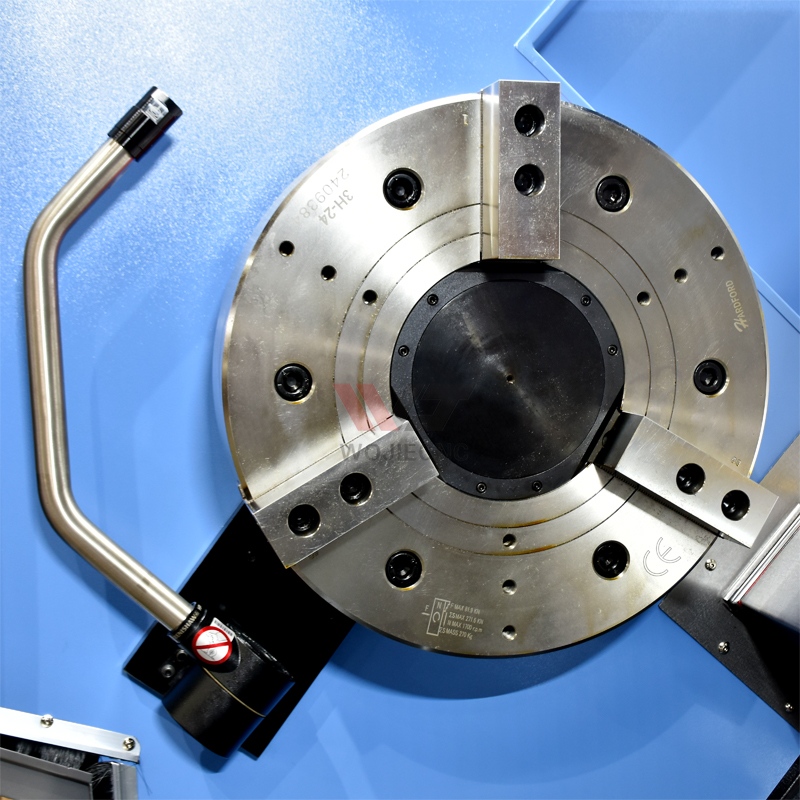
Manufacturing complex turning jobs demands precision, speed, and reliability that standard machine tools struggle to deliver consistently. A slant bed CNC lathe represents a significant evolution in turning technology, offering distinct operational advantages that directly impact production quality and efficiency. The angled bed design of a slant bed CNC lathe fundamentally changes how cutting forces distribute, how chips evacuate, and how the machine maintains dimensional accuracy under sustained cutting pressure. Understanding these advantages helps manufacturers select the right equipment for their most demanding applications.

The slant bed CNC lathe has become the preferred choice across industries that require tight tolerances and high-volume precision turning. The geometry of a slant bed CNC lathe creates inherent structural benefits that flat-bed designs cannot match, particularly when handling interrupted cuts, heavy roughing operations, or parts requiring multiple tool changes. This design philosophy reflects decades of engineering refinement aimed at solving real production challenges in demanding machining environments.
Superior Structural Rigidity and Stability
Angled Bed Design Reduces Vibration
The slant bed CNC lathe architecture positions the spindle at an angle relative to the bed, which fundamentally improves the machine's resistance to vibration and cutting forces. When a slant bed CNC lathe operates, the angled geometry naturally aligns the spindle axis with the primary direction of cutting loads, allowing the machine structure to absorb and dissipate energy more effectively. Traditional horizontal lathes experience forces that try to deflect the spindle and tool holder, causing chatter and surface finish degradation. A slant bed CNC lathe minimizes this deflection through its inherent design, resulting in smoother cuts and superior surface quality even during aggressive machining cycles.
Rigidity directly translates to precision maintenance throughout extended production runs. When a slant bed CNC lathe maintains consistent stiffness, tool wear becomes more predictable, and tool life extends measurably. This stability advantage becomes especially valuable when turning difficult materials like stainless steel, titanium, or cast iron, where vibration control determines whether parts meet specifications or require rework.
Enhanced Spindle Support and Tool Control
A slant bed CNC lathe typically incorporates more massive spindle bearings and preload systems than conventional designs, owing to the angular mounting geometry. This architectural choice means the slant bed CNC lathe can support longer tool overhangs without sacrificing accuracy, enabling machining of complex geometries in fewer setups. The improved spindle support also allows the slant bed CNC lathe to maintain concentricity and runout tolerances in the 0.0001-inch range, critical for aerospace, medical device, and precision automotive applications.
Chip Management and Tool Life Extension
Gravity-Assisted Chip Evacuation
One of the most tangible benefits of operating a slant bed CNC lathe comes from its superior chip management characteristics. The angled bed positioning causes chips to naturally fall away from the cutting zone under gravity, whereas horizontal lathes require active chip conveyors or manual removal. When a slant bed CNC lathe evacuates chips efficiently, cutting fluid reaches the tool-workpiece interface more effectively, reducing heat generation and extending tool life significantly. This advantage becomes pronounced during long turning operations or when machining materials that form troublesome chip types.
Effective chip evacuation directly reduces machine downtime and improves operator safety. A slant bed CNC lathe operator spends less time clearing tangled chips or dealing with re-cut chip issues that damage surfaces and tools. For high-volume production environments, this operational advantage translates to increased uptime and lower per-piece manufacturing cost.
Improved Tool Life and Reduced Cutting Temperatures
The slant bed CNC lathe design enables better flood coolant flow and air gap circulation compared to horizontal machines with parallel beds. When a slant bed CNC lathe properly directs coolant and air through the cutting zone, tool temperature decreases, thermal expansion becomes more predictable, and ceramic or carbide tools maintain their edge geometry longer. Many shops report 20 to 40 percent increases in tool life when switching from conventional lathes to a slant bed CNC lathe for the same turning operations.
Precision and Setup Efficiency for Complex Work
Reduced Setup Time Through Streamlined Geometry
A slant bed CNC lathe's design naturally organizes the workspace in a way that reduces tool interference and simplifies part fixturing. The angled bed of a slant bed CNC lathe means tool turrets, work holding systems, and part datum references align more intuitively, reducing programming complexity and setup mistakes. For manufacturers performing custom work or small-batch production of intricate parts, a slant bed CNC lathe cuts programming and verification time measurably compared to horizontal alternatives.
Setup efficiency directly impacts shop throughput and labor costs. When a slant bed CNC lathe requires fewer tool path corrections and part repositioning, production moves faster from job to job. This efficiency advantage appeals particularly to job shops and specialized manufacturers who change part configurations frequently.
Maintaining Tolerance Consistency Across Production Runs
The structural stability inherent to a slant bed CNC lathe design means thermal growth behaves more uniformly and predictably during extended cutting. This characteristic allows the slant bed CNC lathe to maintain tight tolerance bands across longer production runs without compensating for machine growth. Parts made on a slant bed CNC lathe typically exhibit lower statistical variation in critical dimensions, reducing scrap and rework.
Precision consistency protects manufacturers' reputations and reduces quality-related costs. When customers receive parts from a slant bed CNC lathe that consistently fall within the tightest tolerance band, repeat orders and long-term contracts follow more readily.
FAQ
What types of turning operations benefit most from a slant bed CNC lathe?
A slant bed CNC lathe excels in complex multi-step turning operations involving heavy roughing, interrupted cuts, long tool overhangs, or parts requiring rapid tool changes. Aerospace components, medical device parts, precision automotive shafts, and complex hydraulic fittings all benefit significantly. The slant bed CNC lathe also outperforms horizontal designs when turning difficult materials or maintaining tight tolerances on production runs exceeding 100 pieces where stability and consistency matter most.
How does a slant bed CNC lathe compare to horizontal bed designs for surface finish?
A slant bed CNC lathe typically produces superior surface finishes due to reduced vibration and improved chip evacuation. The angled geometry allows more stable tool engagement and better coolant delivery to the cutting edge. Many users report that a slant bed CNC lathe achieves Ra 0.5 to 1.0 micro-inch finishes in materials where horizontal lathes struggle to reach Ra 1.0 to 2.0 micro-inch. The vibration reduction inherent to a slant bed CNC lathe design directly translates to visible quality improvements on finished parts.
Does a slant bed CNC lathe require special programming or operator training?
While a slant bed CNC lathe operates on the same CNC principles as horizontal machines, programming approach and operator familiarity benefit from specific training. The slant bed CNC lathe's angled coordinate system requires awareness of tool offset geometry and part datum positioning. Most shops find that operators transition to a slant bed CNC lathe within one to two weeks of hands-on experience. The efficiency gains and capability improvements typically make any training investment worthwhile within the first month of production use.

