
 EN



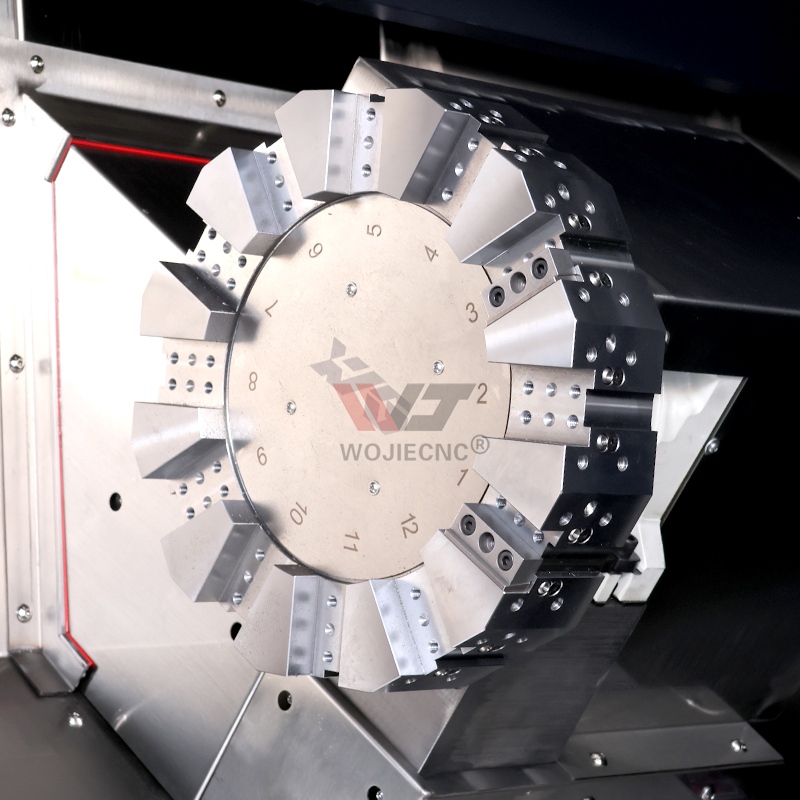
A slant bed CNC lathe represents a significant advancement in precision manufacturing technology, offering manufacturers the ability to execute complex multi-tool machining operations with remarkable efficiency and accuracy. Unlike traditional horizontal-axis lathes, a slant bed CNC lathe features an angled spindle bed that provides superior chip evacuation, enhanced accessibility to cutting tools, and improved operator ergonomics. This design philosophy makes a slant bed CNC lathe particularly well-suited for applications requiring rapid tool changes, intricate part geometries, and tight dimensional tolerances across multiple machining operations in a single setup.
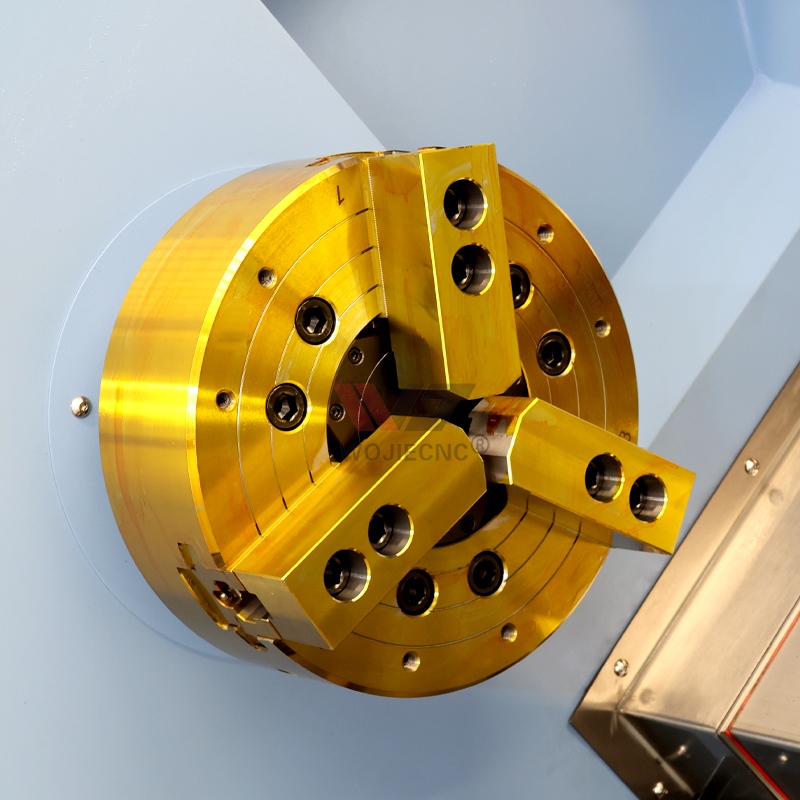
The capability of a slant bed CNC lathe to support multi-tool machining stems from its sophisticated tool management architecture and advanced control systems. Modern implementations of a slant bed CNC lathe integrate automated tool changers, real-time tool offset compensation, and intelligent sequencing logic that dramatically reduce non-cutting time and improve overall equipment effectiveness. Manufacturers operating a slant bed CNC lathe can consolidate workflows that previously required multiple machines, reducing floor space requirements, material handling complexity, and setup labor while maintaining consistent quality across finished components.
Structural Design and Tool Access Optimization
Slanted Bed Configuration Benefits
The slanted orientation of a slant bed CNC lathe bed creates immediate operational advantages that directly enable multi-tool machining efficiency. When the spindle axis is tilted at an angle—typically between 30 and 45 degrees—chips generated during cutting operations naturally fall away from the work area by gravity, eliminating the need for manual chip brushing and reducing machine downtime. This gravity-assisted chip evacuation is particularly valuable when a slant bed CNC lathe operates continuous production runs, as chip accumulation cannot interfere with tool positioning or part quality. Additionally, the angled configuration of a slant bed CNC lathe allows operators and tool changers to approach the work area from multiple angles, creating unobstructed pathways for rapid tool exchanges and inspections without repositioning the workpiece.
Tool Changer Integration and Accessibility
Modern implementations of a slant bed CNC lathe typically feature either carousel-style or linear tool storage systems positioned adjacent to the slanted bed. The geometric clearance provided by a slant bed CNC lathe design ensures that tool changers operate with minimal interference, enabling tool exchanges to occur in under five seconds on high-performance machines. When a slant bed CNC lathe incorporates an eight-tool, twelve-tool, or even larger carousel system, the machine can handle turning operations, threading, drilling, boring, and finishing cuts sequentially without manual intervention. This integration directly addresses multi-tool machining requirements because a slant bed CNC lathe eliminates the mechanical constraints that would otherwise limit tool changer performance on conventional machines.
Multi-Tool Machining Workflow and Control Logic
Automated Tool Sequencing and Offset Management
The real power of a slant bed CNC lathe in multi-tool environments emerges from sophisticated control system logic that manages tool offsets, compensates for wear, and sequences operations automatically. When a slant bed CNC lathe control system receives a multi-tool program, it calculates the optimal tool sequence, pre-compensates for each tool's dimensional characteristics, and schedules tool changes to minimize idle spindle time. Each tool mounted on a slant bed CNC lathe is measured and registered in the machine's offset library, allowing the control to apply precise position corrections for every cutting edge without manual intervention. This systematic approach to tool management means that a slant bed CNC lathe can execute twenty or more distinct cutting operations on a single part in a single clamping, dramatically reducing total machining time compared to machines that require multiple setups or offline tool changes.
Simultaneous Capability and Adaptive Cutting Strategies
Advanced slant bed CNC lathe systems support simultaneous tool engagement in specialized configurations, where the machine coordinates multiple independent tool spindles or turrets to machine different surfaces in parallel. This capability extends beyond traditional sequential cutting and enables applications like simultaneous threading while facing, or concurrent boring and finishing operations that would be impossible on single-tool machines. A slant bed CNC lathe control system monitors spindle loads, tool temperatures, and cutting forces in real time, adjusting feed rates and speeds dynamically to maintain optimal cutting conditions across all active tools. This adaptive control approach maximizes tool life, prevents thermal damage, and ensures that a slant bed CNC lathe achieves consistent part quality even when switching between diverse materials, cross-sections, or tool geometries in rapid succession.
Precision, Productivity, and Industrial Applications
Dimensional Accuracy Across Multiple Operations
A slant bed CNC lathe achieves exceptional dimensional stability during multi-tool operations due to its robust construction, minimized thermal growth, and high-stiffness spindle design. The angled bed of a slant bed CNC lathe reduces bending moments under cutting loads, allowing thinner wall sections without compromising rigidity compared to horizontal machines. When a slant bed CNC lathe machine conducts twenty or more tool changes on a single part, accumulated errors from repeatability issues would normally compound, yet modern slant bed CNC lathe machines maintain tolerances of ±0.001 inches or better through the entire sequence. This precision advantage is critical for applications like automotive transmission components, medical device shafts, and hydraulic valve bodies, where multiple features must be machined with interconnected tolerances that cannot tolerate errors from setup variations.
Production Efficiency and Lead Time Reduction
Manufacturers implementing a slant bed CNC lathe for multi-tool applications consistently report production cycle time reductions of 40 to 60 percent compared to traditional machine centers or transfer machines. A slant bed CNC lathe consolidates manufacturing steps because a single machine handles turning, boring, threading, face grooming, and finishing operations in sequence without unloading the part. Setup time decreases dramatically because a slant bed CNC lathe requires only one workholding operation, one part program initialization, and one final inspection rather than multiple machine relocations. The reduced material handling associated with a slant bed CNC lathe also lowers part damage risk, decreases labor costs, and improves on-time delivery performance. Industries ranging from automotive suppliers to medical device manufacturers to agricultural equipment producers rely on a slant bed CNC lathe to compress lead times and respond to market demand with greater agility.
FAQ
What types of cutting tools can be mounted on a slant bed CNC lathe?
A slant bed CNC lathe accommodates a wide variety of cutting tool geometries, including turning inserts, threading tools, drill bits, boring bars, grooving tools, and live tools equipped with motor-driven spindles. The tool holder interface on a slant bed CNC lathe typically follows industry standards like VDI, ISO, or proprietary quick-change systems, allowing rapid substitution of tool assemblies without requiring complete carousel unloading. Advanced a slant bed CNC lathe models support live tool positions that can engage milling operations, cross-hole drilling, and angle cuts that would normally require secondary machines.
How does a slant bed CNC lathe maintain accuracy when multiple tools are used sequentially?
A slant bed CNC lathe control system maintains accuracy through several mechanisms: each tool is individually measured and its offset stored in the machine library, the machine monitors spindle load and thermal conditions continuously, and adaptive cutting strategies adjust parameters in real time. The spindle return repeatability of a slant bed CNC lathe is typically within 0.0001 inches, ensuring that tool changes do not introduce positional errors. When a slant bed CNC lathe completes one operation and indexes a new tool, the control automatically applies the correct offsets before commencing cutting, eliminating cumulative errors across the entire tool sequence.
Is a slant bed CNC lathe suitable for small-batch or one-off custom part production?
Yes, a slant bed CNC lathe is highly effective for small-batch and custom work because its tool flexibility and rapid setup capability reduce the time required to transition between different part designs. Although a slant bed CNC lathe represents a capital investment, the consolidated machining capability means that each setup hour produces more finished geometry compared to traditional machine combinations. For prototype development and low-volume manufacturing, a slant bed CNC lathe eliminates the complexity and expense of coordinating multiple machine operations, making custom production faster and more economical.

