Double Column Vertical Machining Center

Get a Free Quote

Our representative will contact you soon.
Email
Mobile/WhatsApp
Name
Company Name
Message
0/1000

double column vertical machining center

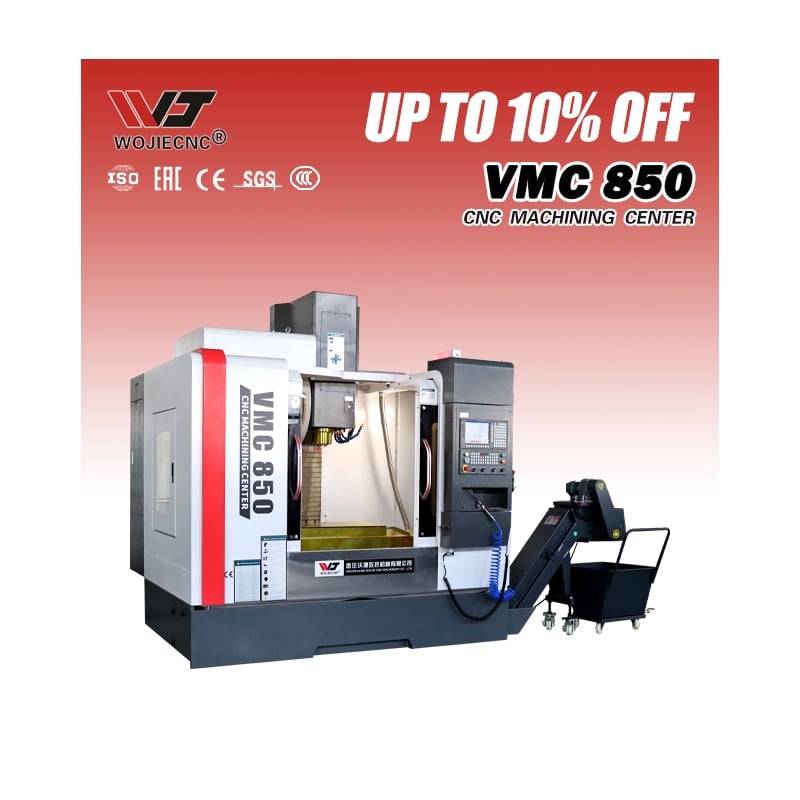
A double column vertical machining center is a high-performance CNC machine tool designed to handle large, heavy, and complex workpieces with exceptional precision. Its defining structural feature is a dual-column gantry frame that surrounds the worktable on both sides, providing superior rigidity and stability during cutting operations. This robust architecture minimizes vibration and deflection, ensuring consistent dimensional accuracy even under demanding machining conditions. The double column vertical machining center typically integrates a high-speed spindle mounted on a cross-beam between the two columns, allowing the tool to travel horizontally and vertically across the workpiece. Most models support multi-axis configurations, including three-axis, four-axis, and five-axis setups, enabling complex contouring, drilling, boring, milling, and tapping in a single setup. The worktable can accommodate extremely large workpieces weighing several tons, making this machine ideal for industries that require processing oversized components. Advanced CNC control systems, servo-driven feed axes, and automatic tool changers further enhance its productivity and versatility. Thermal compensation technology and precision linear guides maintain machining accuracy across long production runs. The double column vertical machining center serves a wide range of industries, including aerospace, automotive, mold and die manufacturing, energy, and heavy engineering. Its ability to combine structural strength with high-precision performance makes it one of the most capable machining platforms available today. Manufacturers seeking reliable, high-capacity solutions for large-part processing consistently turn to the double column vertical machining center as their preferred equipment choice.

New Products

The double column vertical machining center delivers clear, practical benefits that directly impact your production efficiency and bottom line. First, its twin-column gantry structure provides outstanding rigidity. Unlike single-column machines that flex under heavy cutting loads, this design keeps the spindle firmly positioned throughout every operation, reducing tool wear and rework. You spend less time correcting errors and more time producing finished parts. Second, the machine handles genuinely large workpieces. If your shop processes molds, structural components, turbine parts, or automotive dies, the wide worktable and high load capacity of the double column vertical machining center mean you no longer need to break jobs into multiple setups. One fixture, one setup, one finished part — that saves hours per job. Third, multi-axis capability gives you access to complex geometries without purchasing separate specialized equipment. Five-axis versions of the double column vertical machining center can machine undercuts, compound angles, and curved surfaces in a single run, cutting lead times dramatically. Fourth, the machine runs consistently over long periods. Thermal compensation systems and rigid construction prevent accuracy drift during extended shifts, so your first part and your hundredth part meet the same specifications. Fifth, automation-ready features like automatic tool changers and pallet systems make unattended overnight machining practical, which stretches your capacity without adding headcount. Sixth, the double column vertical machining center suits a broad customer base — from aerospace contractors needing tight tolerances on titanium frames to mold makers processing large steel cavities. Whether you are scaling up production or entering new markets requiring heavier workpieces, this machine delivers the combination of size, strength, and precision that gives your business a genuine competitive edge.

Practical Tips

Is a grinding machine the right solution for high-hardness material processing?

28

May

Is a grinding machine the right solution for high-hardness material processing?

When manufacturers face the challenge of processing high-hardness materials, the question of which equipment to use becomes critically important. A grinding machine is widely regarded as one of the most capable tools for achieving tight tolerances an...
View More
Which drilling machine features ensure stable and accurate hole processing?

08

May

Which drilling machine features ensure stable and accurate hole processing?

Achieving stable and accurate hole processing is one of the most critical challenges in precision manufacturing. Whether you are working with metal components, structural frames, or mechanical assemblies, the quality of every drilled hole depends hea...
View More
What safety elements must operators check before using a drilling machine?

22

May

What safety elements must operators check before using a drilling machine?

Before any operator powers up a drilling machine, a structured pre-operation safety check is not optional — it is a professional obligation. Industrial environments demand that every person working with a drilling machine understands the mechanical, ...
View More
What factors influence long-term accuracy in a vertical machining center?

26

Jun

What factors influence long-term accuracy in a vertical machining center?

Long-term accuracy in a vertical machining center is not a fixed property that remains unchanged after installation. It is a dynamic outcome shaped by mechanical design, environmental conditions, operational habits, and maintenance discipline. Unders...
View More

Get a Free Quote

Our representative will contact you soon.
Email
Mobile/WhatsApp
Name
Company Name
Message
0/1000

double column vertical machining center

Exceptional Structural Rigidity for Heavy-Duty Cutting

Exceptional Structural Rigidity for Heavy-Duty Cutting

The core strength of the double column vertical machining center lies in its symmetrical dual-column frame. This gantry-style architecture distributes cutting forces evenly across both columns, preventing the spindle head from deflecting under aggressive material removal. Compared to a single-column bridge machine, this design dramatically reduces vibration transmitted to the cutting tool, which directly translates into superior surface finish and tighter dimensional tolerances on every workpiece. Manufacturers processing hardened steel, cast iron, titanium, and other difficult materials benefit most from this rigidity advantage. The double column vertical machining center maintains geometric accuracy even during deep roughing passes at high feed rates, allowing shops to combine heavy roughing and fine finishing in the same setup without repositioning the part. This structural integrity also extends spindle bearing life and reduces tool breakage rates, lowering your total cost per machined component and increasing overall machine uptime across demanding production schedules.
Large-Format Worktable with High Load Capacity

Large-Format Worktable with High Load Capacity

One of the most compelling reasons manufacturers invest in a double column vertical machining center is its ability to support extremely large and heavy workpieces that smaller machines simply cannot accommodate. The worktable on these machines commonly ranges from one meter to several meters in length, with load ratings that can reach tens of thousands of kilograms depending on the model. This capacity is critical for industries producing energy equipment housings, large mold bases, ship propeller hubs, and aerospace structural panels. Because the workpiece stays fixed in a single setup throughout the entire machining sequence, positional errors introduced by re-clamping are completely eliminated. This single-setup advantage not only improves part accuracy but also compresses total cycle time significantly. The double column vertical machining center therefore becomes the most efficient and cost-effective solution whenever your production involves components that exceed the table size of conventional vertical machining centers.
Multi-Axis Precision for Complex Component Machining

Multi-Axis Precision for Complex Component Machining

Modern versions of the double column vertical machining center are available with four-axis and five-axis configurations that unlock a completely new level of geometric freedom. A five-axis model adds rotary and tilt motion to the standard XYZ travels, allowing the cutting tool to approach the workpiece from virtually any direction without manual repositioning. This capability is essential for machining aerospace impellers, complex mold cavities with deep undercuts, automotive cylinder heads, and turbine blade fixtures. Reducing part handling between operations not only saves time but also prevents cumulative positioning errors that degrade final part quality. Integrated CNC systems with look-ahead interpolation and adaptive feed rate control ensure smooth toolpaths even on intricate curved surfaces. For manufacturers competing on delivery speed and part complexity, the multi-axis double column vertical machining center provides a decisive technological advantage that supports winning contracts for the most demanding, high-value components in the market today.
Double Column Vertical Machining Center

Get a Free Quote

Our representative will contact you soon.
Email
Mobile/WhatsApp
Name
Company Name
Message
0/1000
email goToTop