CNC Vertical Lathe: Precision Machining Solutions

Get a Free Quote

Our representative will contact you soon.
Email
Mobile/WhatsApp
Name
Company Name
Message
0/1000

cnc vertical lathe

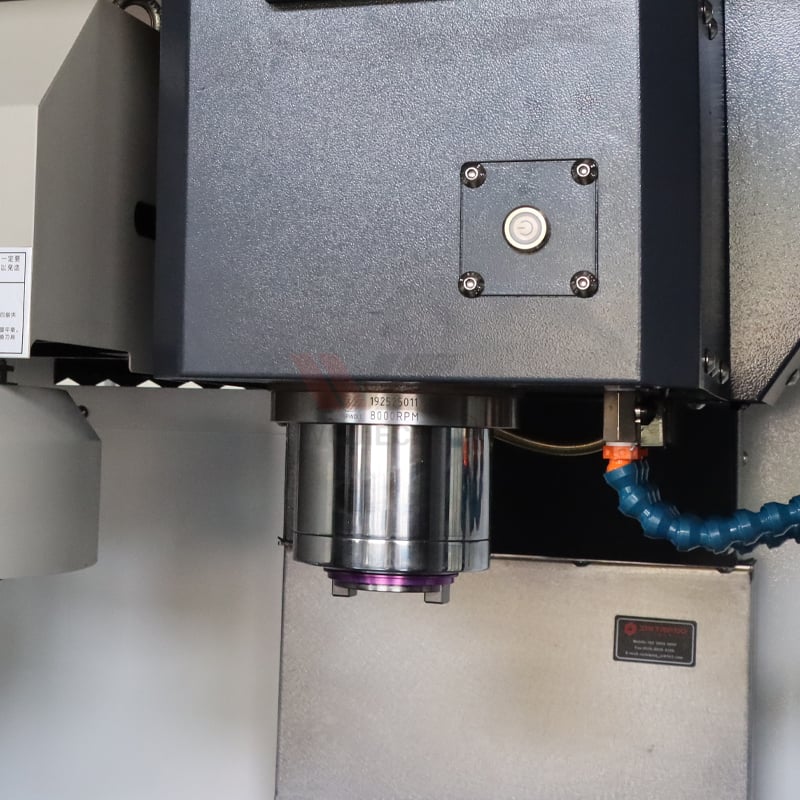
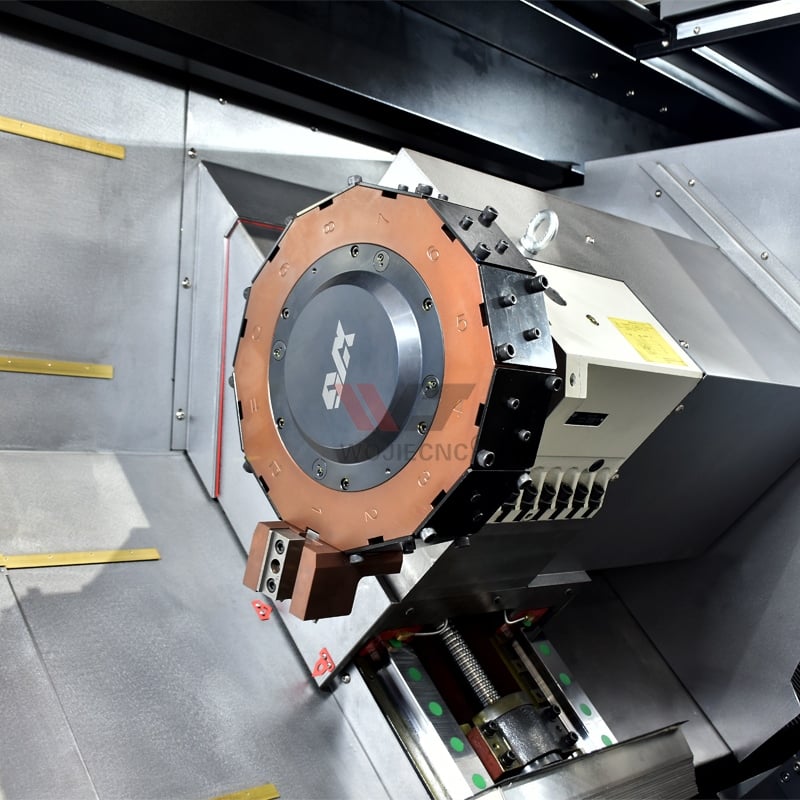
A CNC vertical lathe is a high-precision machine tool designed to rotate a workpiece on a vertical axis while cutting tools shape it with exceptional accuracy. Unlike horizontal lathes, the CNC vertical lathe positions the workpiece on a rotating table that faces upward, making it ideal for large, heavy, or short cylindrical components that would be difficult to support horizontally. The machine is fully controlled by a computer numerical control system, allowing operators to program complex cutting paths, maintain tight tolerances, and reproduce results consistently across large production runs. The main functions of a CNC vertical lathe include turning, boring, facing, and grooving operations on a wide range of materials such as steel, cast iron, aluminum, and titanium. Advanced models feature multi-axis control, live tooling, and automatic tool changers that significantly reduce setup time and expand machining capability. The CNC vertical lathe is equipped with rigid cast iron or polymer composite structures that absorb vibration and maintain dimensional stability during heavy-duty cutting. Modern control interfaces support G-code programming, conversational input, and integration with CAD/CAM software, simplifying workflow from design to finished part. Industries that rely heavily on this machine include aerospace, energy, automotive, shipbuilding, and heavy equipment manufacturing. Whether producing turbine discs, brake rotors, large flanges, or bearing housings, the CNC vertical lathe delivers consistent surface finishes and dimensional accuracy. Its compact vertical footprint also reduces floor space requirements compared to equivalent horizontal machines, making it a practical investment for facilities of all sizes.

New Products

Choosing a CNC vertical lathe gives your shop real, measurable advantages that directly affect output quality, operating costs, and production speed. Here is why buyers consistently find this machine valuable. First, the vertical orientation of the worktable uses gravity to your benefit. Heavy workpieces rest securely on the rotating table without requiring complex fixturing systems. This means less clamping hardware, faster part loading, and reduced risk of distortion caused by excessive clamping force on delicate components. Second, a CNC vertical lathe handles large-diameter parts that simply cannot be managed on a standard horizontal lathe. Turbine rings, wind energy components, large pump housings, and heavy flanges all fit naturally on the vertical table, giving manufacturers access to workpiece sizes that expand their service offerings and contract opportunities. Third, the CNC control system eliminates manual adjustments between passes. Once the program is set, the machine repeats every cut with identical precision. This directly lowers scrap rates, reduces reliance on highly skilled operators for every cycle, and speeds up the overall production timeline. Fourth, modern CNC vertical lathes integrate smoothly with factory automation systems. Robotic loading, in-process gauging, and networked monitoring allow you to run longer unattended cycles, which cuts labor costs and increases machine utilization rates. Fifth, maintenance on a CNC vertical lathe is straightforward because the vertical design keeps chips and coolant away from critical guideways, extending component service life and reducing downtime. Finally, the long-term return on investment is strong. Faster cycle times, lower scrap, reduced fixturing costs, and broader job capabilities combine to deliver cost savings that justify the purchase price relatively quickly. Buyers across aerospace, automotive, and energy sectors consistently report improved throughput and quality after integrating a CNC vertical lathe into their production environment.

Tips And Tricks

How does a drilling machine support mixed-material machining requirements?

28

May

How does a drilling machine support mixed-material machining requirements?

In modern manufacturing environments, the ability to work across multiple material types within a single production cycle has become a defining requirement for competitiveness. A drilling machine that can accommodate this kind of material diversity i...
View More
Could a CNC lathe machine significantly reduce labor reliance in machining?

08

May

Could a CNC lathe machine significantly reduce labor reliance in machining?

The question of whether a cnc lathe machine can significantly reduce labor reliance in machining is one that manufacturers across industries are actively confronting. As labor costs rise, skilled operator shortages deepen, and production demands grow...
View More
How do manufacturers select a hydraulic press machine for metal stamping?

01

Jun

How do manufacturers select a hydraulic press machine for metal stamping?

Selecting the right hydraulic press machine for metal stamping is one of the most consequential decisions a manufacturer can make. The hydraulic press machine sits at the heart of stamping operations, directly influencing part quality, cycle time, to...
View More
Could a CNC machining center reduce processing steps in your manufacturing line?

15

Jun

Could a CNC machining center reduce processing steps in your manufacturing line?

Manufacturing teams constantly search for ways to cut complexity without sacrificing precision. One of the most direct paths to that goal is integrating a cnc machining center into the production line. A cnc machining center consolidates multiple ope...
View More

Get a Free Quote

Our representative will contact you soon.
Email
Mobile/WhatsApp
Name
Company Name
Message
0/1000

cnc vertical lathe

Precision Control for Complex Geometries

Precision Control for Complex Geometries

The CNC vertical lathe delivers outstanding dimensional accuracy on even the most challenging workpiece geometries. Its computer numerical control system executes multi-axis movements simultaneously, enabling operators to machine intricate profiles, tapered bores, contoured faces, and precision threads in a single setup. This capability eliminates the need to reposition the workpiece between operations, reducing cumulative positioning errors and saving significant cycle time. The rigid machine structure, combined with high-resolution linear encoders and servo-driven axes, ensures that every cut follows the programmed path within micron-level tolerances. For industries like aerospace and energy generation, where component failure is not an option, this level of precision is not a luxury but a fundamental requirement. Customers benefit from repeatable quality across entire production batches, consistent compliance with engineering drawings, and reduced need for secondary finishing operations, all of which lower total manufacturing cost per part.
Efficient Handling of Large, Heavy Workpieces

Efficient Handling of Large, Heavy Workpieces

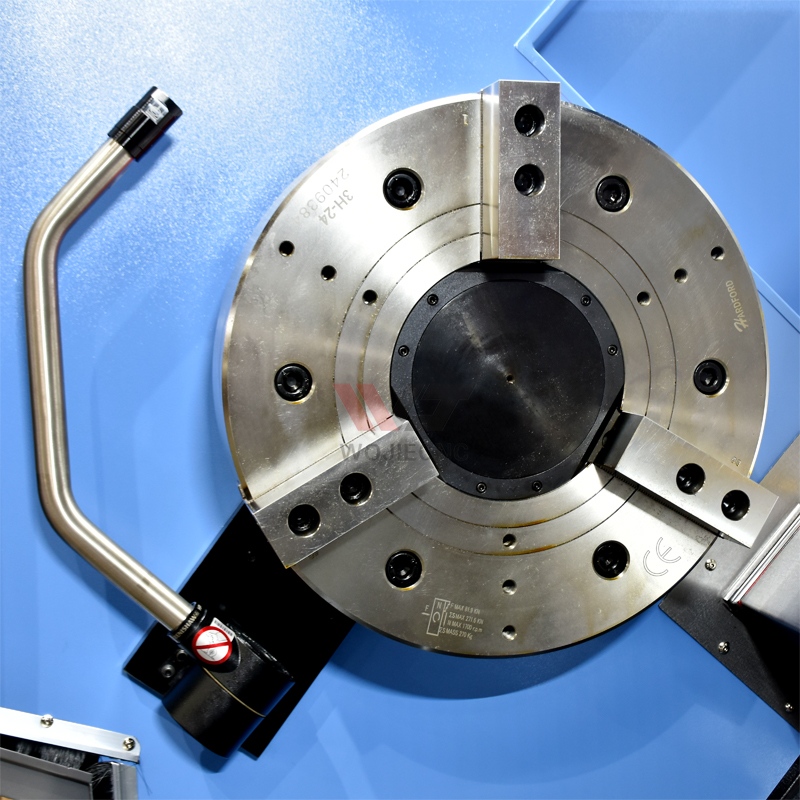
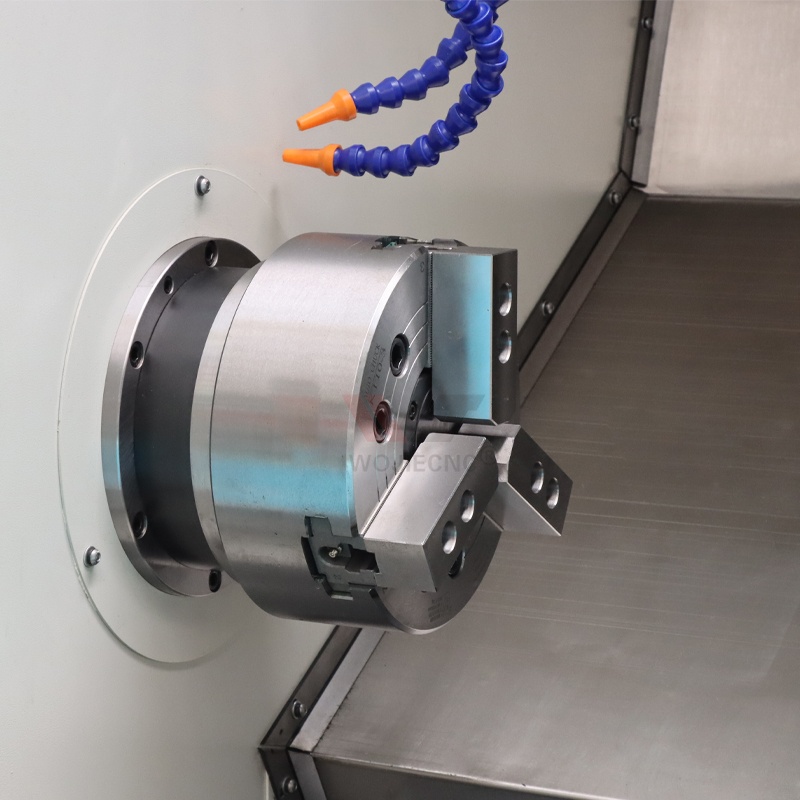
One of the most practical strengths of a CNC vertical lathe is its ability to handle oversized and extremely heavy workpieces safely and efficiently. The horizontal rotating table supports components weighing several tons without requiring elaborate overhead lifting or complex workholding arrangements. Gravity keeps the part seated firmly against the table surface, which simplifies clamping and speeds up setup considerably. This design is particularly valuable when machining wind turbine hubs, large gear blanks, mining equipment housings, and industrial valve bodies. Conventional horizontal lathes struggle with these parts because supporting heavy overhanging weight increases deflection and reduces accuracy. The CNC vertical lathe eliminates that problem entirely. Operators load parts faster, achieve better stability during cutting, and maintain tighter tolerances even on very large diameters, which directly translates into higher throughput and improved part quality for heavy-industry customers.
Seamless Integration with Modern Manufacturing Systems

Seamless Integration with Modern Manufacturing Systems

Today's CNC vertical lathe is designed to work as part of a connected, data-driven manufacturing environment rather than as a standalone machine. Modern models support open communication protocols that link the lathe to factory management software, quality inspection systems, and robotic automation cells. Automatic tool changers and in-process measurement probes allow the machine to adapt to tool wear in real time, maintaining dimensional accuracy without stopping production for manual checks. Remote monitoring capabilities let production managers track spindle utilization, cycle counts, and alarm status from any connected device, supporting smarter scheduling decisions. This level of integration reduces human intervention, shortens lead times, and improves overall equipment effectiveness across the facility. For manufacturers aiming to scale output without proportionally increasing headcount, the CNC vertical lathe represents a strategic investment that aligns with modern smart factory goals and supports long-term competitiveness.
CNC Vertical Lathe: Precision Machining Solutions

Get a Free Quote

Our representative will contact you soon.
Email
Mobile/WhatsApp
Name
Company Name
Message
0/1000
email goToTop