
 EN
EN



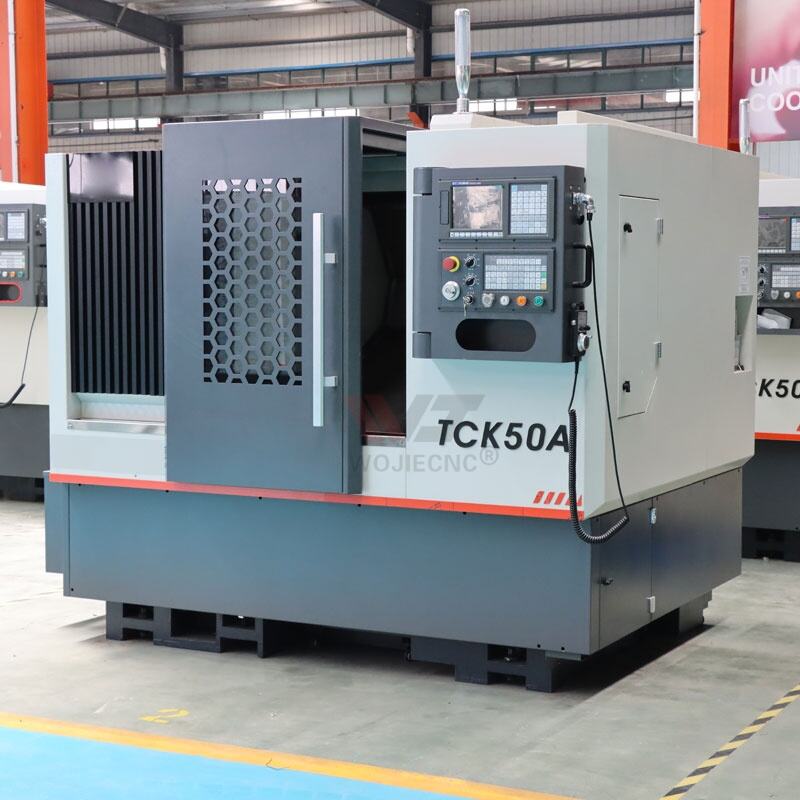
Modern manufacturing demands exceptional precision and consistency, especially when handling high-volume production runs. A cnc lathe represents the cornerstone of precision machining, delivering unmatched accuracy and repeatability that traditional manual lathes simply cannot achieve. This advanced machining technology has revolutionized how manufacturers approach mass production, enabling them to maintain tight tolerances while maximizing throughput and minimizing human error.
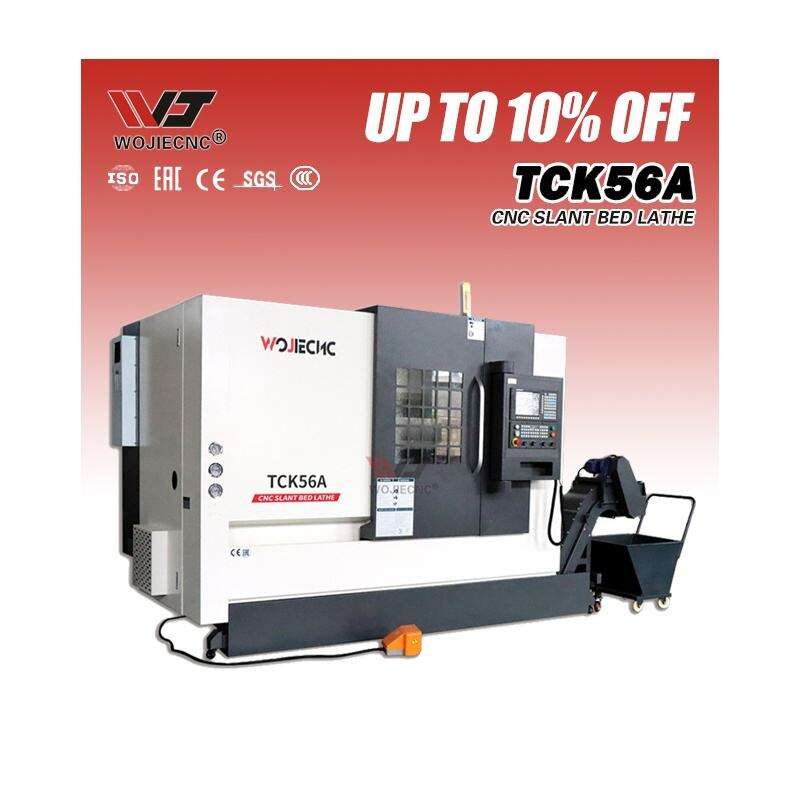
The integration of computer numerical control technology into lathe operations has transformed the manufacturing landscape. Industries ranging from aerospace to automotive rely on cnc lathe systems to produce components with micron-level precision. These sophisticated machines eliminate the variability inherent in manual operations, ensuring that every part meets exact specifications regardless of production volume or operator skill level.
Understanding CNC Lathe Technology and Its Core Advantages
Fundamental Principles of CNC Lathe Operation
A cnc lathe operates through precise computer-controlled movements that guide cutting tools along predetermined paths. The system interprets G-code instructions to execute complex turning operations with mathematical precision. This digital control eliminates human error while enabling the machine to repeat identical operations thousands of times without deviation. The spindle rotates the workpiece at precisely controlled speeds while the cutting tool moves along multiple axes to create the desired geometry.
The heart of any cnc lathe lies in its control system, which processes programmed instructions and translates them into mechanical movements. Servo motors drive each axis with exceptional accuracy, typically achieving positioning tolerances within 0.001 inches or better. This level of precision makes it possible to maintain consistent part quality throughout extended production runs, regardless of external factors that might affect manual operations.
Key Components That Enable Precision Manufacturing
Modern cnc lathe systems incorporate several critical components that work together to achieve superior precision. High-quality ball screws and linear guides ensure smooth, accurate motion along each axis. The machine structure itself features robust construction designed to minimize vibration and deflection during heavy cutting operations. Tool holders and turrets provide secure positioning of cutting tools while enabling rapid tool changes to maintain production efficiency.
Advanced cnc lathe models feature sophisticated spindle systems with precise speed control and high torque capabilities. These spindles maintain consistent rotation even under varying load conditions, ensuring uniform surface finishes and dimensional accuracy. The integration of closed-loop feedback systems allows the machine to continuously monitor and adjust its position, compensating for any drift or wear that might affect precision over time.
Precision Enhancement Mechanisms in Modern CNC Lathes
Advanced Control Systems and Feedback Loops
Contemporary cnc lathe systems employ sophisticated control algorithms that continuously monitor machine performance and make real-time adjustments. These systems utilize multiple feedback sensors to track spindle position, tool wear, temperature variations, and cutting forces. By analyzing this data, the control system can automatically compensate for factors that might otherwise compromise precision, maintaining consistent part quality throughout the production cycle.
The implementation of adaptive control technology allows a cnc lathe to automatically adjust cutting parameters based on real-time conditions. This intelligent response ensures optimal cutting conditions are maintained even as tool wear progresses or material properties vary. Such advanced control capabilities represent a significant advantage over traditional machining methods, where operators must manually adjust settings based on experience and intuition.
Thermal Management and Environmental Control
Temperature fluctuations can significantly impact machining precision, causing dimensional variations as machine components expand or contract. Modern cnc lathe designs incorporate comprehensive thermal management systems to maintain stable operating temperatures. These systems may include coolant circulation, spindle temperature monitoring, and environmental enclosures that protect the machine from external temperature variations.
Some advanced cnc lathe models feature thermal compensation algorithms that automatically adjust machine positioning based on measured temperature changes. This proactive approach ensures dimensional accuracy is maintained even during extended production runs or in facilities with varying ambient temperatures. The result is consistent part quality that meets specifications regardless of environmental conditions.
Mass Production Benefits and Efficiency Gains
Automated Operation and Reduced Human Intervention
The automated nature of cnc lathe operation provides tremendous advantages for mass production environments. Once programmed, these machines can operate continuously with minimal supervision, producing hundreds or thousands of identical parts without manual intervention. This automation eliminates the variability associated with human operators while dramatically increasing production capacity and reducing labor costs per part.
Advanced cnc lathe systems can integrate with automated material handling systems, creating fully autonomous production cells. These integrated systems can load raw materials, machine parts to specification, perform quality checks, and sort finished components without human intervention. Such automation capabilities make it possible to achieve unprecedented production rates while maintaining exceptional quality standards.
Quality Consistency and Statistical Process Control
Mass production success depends heavily on maintaining consistent quality across all manufactured parts. A cnc lathe excels in this area by eliminating the natural variation that occurs with manual operations. Every part is machined using identical parameters and tool paths, resulting in remarkably consistent dimensional accuracy and surface finish quality throughout the production run.
Modern cnc lathe systems can integrate with statistical process control software to continuously monitor part quality and detect trends that might indicate developing problems. This proactive quality management approach allows manufacturers to address issues before they result in defective parts, reducing waste and maintaining customer satisfaction. The detailed data logging capabilities of cnc lathe systems also provide valuable insights for continuous process improvement.
Industry Applications and Real-World Performance
Aerospace and Defense Manufacturing Requirements
The aerospace industry demands exceptional precision and reliability, making cnc lathe technology essential for producing critical flight components. These applications often require tolerances measured in thousandths of an inch while working with exotic materials like titanium and inconel. A cnc lathe can maintain such tight tolerances consistently, even when machining difficult-to-cut materials that would challenge traditional machining methods.
Defense contractors rely on cnc lathe capabilities to produce components for weapons systems, vehicles, and electronic equipment. The ability to maintain precise specifications while producing parts in quantity makes these machines invaluable for meeting military procurement requirements. Additionally, the programmable nature of cnc lathe systems allows for easy adaptation when design changes are required, providing flexibility that is crucial in defense applications.
Automotive and Transportation Component Production
Automotive manufacturers utilize cnc lathe technology extensively for producing engine components, transmission parts, and suspension elements. The high production volumes typical in automotive manufacturing make the consistency and speed of cnc lathe operation particularly valuable. These machines can produce thousands of identical parts per day while maintaining the tight tolerances required for proper fit and function in automotive assemblies.
The versatility of modern cnc lathe systems allows automotive manufacturers to produce a wide range of components on the same machine platform. By simply changing the program and tooling, a single cnc lathe can manufacture different part numbers as production requirements change. This flexibility reduces capital equipment requirements while maximizing machine utilization rates.
Economic Impact and Return on Investment
Cost Reduction Through Improved Efficiency
Investing in cnc lathe technology typically generates significant cost savings through improved operational efficiency. These machines can operate at higher speeds than manual lathes while maintaining superior accuracy, resulting in increased production rates and reduced cycle times. The automated operation also reduces labor costs, as one operator can often supervise multiple cnc lathe machines simultaneously.
The precision capabilities of a cnc lathe also reduce material waste by minimizing rejected parts and rework requirements. When parts are consistently manufactured to specification, there is less need for secondary operations or quality sorting. This improved first-pass yield translates directly into cost savings through reduced material consumption and increased throughput.
Long-Term Competitive Advantages
Companies that invest in cnc lathe technology often gain significant competitive advantages in their markets. The ability to deliver high-quality parts consistently and on schedule builds customer confidence and loyalty. Additionally, the flexibility of programmable cnc lathe systems allows manufacturers to respond quickly to changing customer requirements or new product introductions.
The data collection capabilities inherent in cnc lathe systems provide valuable insights for continuous improvement initiatives. Manufacturers can analyze production data to identify optimization opportunities, predict maintenance requirements, and improve overall equipment effectiveness. This data-driven approach to manufacturing excellence helps companies maintain their competitive position in increasingly demanding markets.
Future Trends and Technological Developments
Integration with Industry 4.0 Technologies
The future of cnc lathe technology lies in its integration with Industry 4.0 concepts and Internet of Things connectivity. Smart cnc lathe systems will feature enhanced sensor networks that provide real-time monitoring of machine health, cutting tool condition, and part quality. This connectivity enables predictive maintenance strategies that minimize unplanned downtime while optimizing machine performance.
Advanced analytics and artificial intelligence will further enhance cnc lathe capabilities by enabling self-optimizing machining processes. These systems will automatically adjust cutting parameters based on real-time feedback to optimize tool life, surface finish, and cycle time. Such intelligent automation represents the next evolution in precision manufacturing technology.
Enhanced Precision Through Advanced Materials and Design
Future cnc lathe designs will incorporate advanced materials and construction techniques to achieve even higher levels of precision and stability. Polymer concrete machine bases, ceramic spindle bearings, and carbon fiber structural components will reduce thermal expansion and vibration while improving overall machine performance. These material advances will enable tighter tolerances and better surface finishes in mass production applications.
The development of new cutting tool materials and coatings will also enhance cnc lathe performance by enabling higher cutting speeds and longer tool life. Advanced tool materials will maintain sharp cutting edges longer, resulting in more consistent part quality throughout the production run. These improvements will further increase the economic advantages of cnc lathe technology in mass production environments.
FAQ
What tolerance levels can a CNC lathe achieve in mass production
A modern cnc lathe can consistently achieve tolerances of ±0.0001 inches or better in mass production applications. The actual tolerance achievable depends on factors such as part geometry, material properties, and machine condition. With proper setup and maintenance, many cnc lathe systems can maintain tolerances within ±0.00005 inches for critical dimensions, making them suitable for the most demanding precision applications.
How does CNC lathe automation reduce production costs
CNC lathe automation reduces production costs through several mechanisms including reduced labor requirements, improved cycle times, and enhanced part quality. A single operator can typically supervise multiple cnc lathe machines, reducing labor costs per part. The automated operation also eliminates human error and variability, resulting in higher first-pass yields and reduced scrap rates. Additionally, the consistent operation of a cnc lathe enables optimized cutting parameters that maximize tool life and minimize production time.
What maintenance requirements are needed to maintain CNC lathe precision
Maintaining cnc lathe precision requires regular preventive maintenance including spindle bearing inspection, ball screw lubrication, and accuracy verification using precision measurement tools. Daily maintenance tasks include checking coolant levels, cleaning chips, and verifying tool condition. Weekly maintenance may involve calibrating the machine coordinate system and checking guide way lubrication. Monthly maintenance typically includes spindle runout checks and preventive replacement of wear components before they affect part quality.
Can a CNC lathe handle different materials in the same production run
Yes, a cnc lathe can accommodate different materials within the same production run by adjusting cutting parameters through program changes. Modern cnc lathe systems can store multiple programs with optimized settings for different materials, allowing quick changeovers without compromising precision or efficiency. The machine can automatically adjust spindle speed, feed rates, and cutting depths based on the material being machined, ensuring optimal results regardless of material variations. This flexibility makes cnc lathe technology particularly valuable for job shops and manufacturers with diverse product lines.

