
 EN
EN



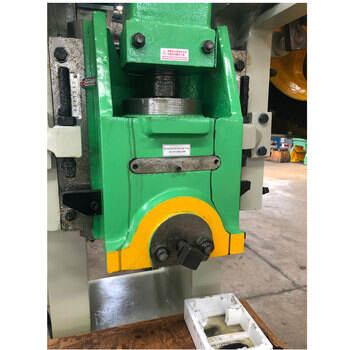
In modern manufacturing environments where speed and precision determine competitive advantage, reducing production time for repetitive tasks has become a critical objective for operations managers and production engineers. A punching machine offers a transformative solution by automating hole-punching, forming, and cutting operations that would otherwise consume substantial manual labor hours. By eliminating the variability and bottlenecks inherent in manual or semi-automated processes, these machines enable manufacturers to achieve consistent cycle times, minimize material handling, and dramatically increase throughput without compromising quality standards.
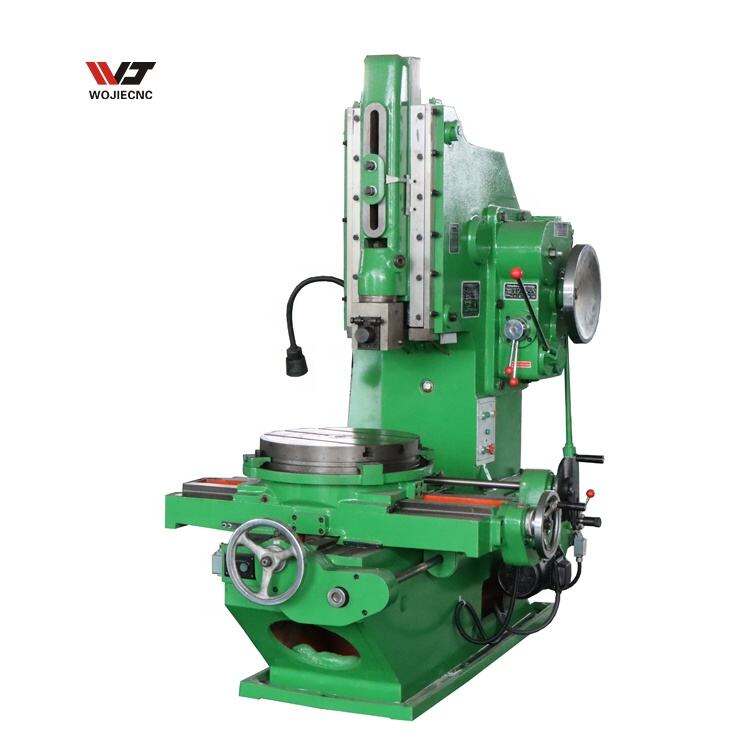
The fundamental mechanism through which a punching machine reduces production time lies in its ability to execute high-speed, repetitive operations with minimal operator intervention. Unlike traditional drilling or manual punching methods that require repositioning, tool changes, and constant monitoring, modern punching machines integrate programmable controls, automatic tool selection, and rapid positioning systems that execute complex patterns in seconds. This automation directly translates into measurable time savings across every production shift, making the punching machine an essential asset for industries ranging from automotive component fabrication to electrical enclosure manufacturing.
Understanding the Time-Saving Mechanisms of Punching Machines
High-Speed Operation and Cycle Time Reduction
The primary advantage of a punching machine in repetitive task environments is its exceptional cycle speed compared to conventional methods. Modern CNC punching machines can deliver between 300 to 1,000 hits per minute depending on material thickness and hole size, a rate impossible to achieve through manual drilling or mechanical press operations. This velocity stems from servo-driven ram systems that accelerate and decelerate with precision, eliminating the dwell time typical of hydraulic systems. Each punching cycle completes in fractions of a second, allowing manufacturers to process hundreds of identical parts per hour with consistent accuracy.
Beyond raw speed, the punching machine achieves time reduction through optimized tool path programming. Advanced control systems calculate the shortest distance between punch locations, minimize repositioning moves, and group similar operations to reduce tool changes. This intelligent sequencing means that a sheet requiring 50 holes can be completed in a continuous operation lasting seconds rather than minutes. The cumulative effect across a production run of thousands of parts translates into hours saved per shift, directly impacting production capacity and delivery schedules.
Furthermore, the repeatability of automated punching operations eliminates the trial-and-error phase common in manual setups. Once a program is validated, every subsequent part replicates the exact hole placement, diameter, and edge quality without operator adjustment. This consistency removes the inspection delays and rework loops that plague manual processes, ensuring that production time is spent exclusively on value-adding operations rather than correction activities.
Elimination of Manual Handling and Setup Time
A significant yet often underestimated time drain in repetitive manufacturing tasks is the material handling required between operations. Traditional workflows involve moving workpieces from marking stations to drilling stations, then to deburring and inspection areas, with each transfer consuming minutes per part. A punching machine consolidates these operations into a single automated process, where the sheet metal is loaded once and all punching operations complete without intermediate handling. This integration eliminates transport time, reduces queue buildup between workstations, and minimizes the risk of handling damage that would require additional processing time.
Setup time reduction represents another critical time-saving factor. Modern punching machines equipped with automatic tool changers and multi-tool turrets can switch between different punch sizes and shapes in seconds without operator intervention. In contrast, manual drill presses or conventional punch presses require operators to physically remove and install tools, adjust depth settings, and verify alignment before each operation. For production runs involving multiple hole sizes or shapes, this setup overhead can consume 20-30% of total production time. The punching machine eliminates this burden through pre-programmed tool sequences that execute seamlessly during the production cycle.
Additionally, the punching machine reduces changeover time between different part designs. With stored CNC programs, transitioning from one product to another requires only loading the appropriate file and positioning new material. There is no need to fabricate new templates, recalibrate fixtures, or conduct extensive first-article inspections. This flexibility enables manufacturers to implement smaller batch sizes and mixed-model production without suffering the time penalties traditionally associated with frequent changeovers, thereby improving overall equipment effectiveness and responsiveness to customer demand fluctuations.
Parallel Processing and Multi-Operation Capability
Advanced punching machines incorporate parallel processing capabilities that further compress production time. Multi-station systems can perform multiple punching operations simultaneously at different locations on the same workpiece, effectively multiplying throughput without increasing cycle time. For example, while one punch creates holes along the left edge of a panel, another can simultaneously form louvers along the right edge, and a third can emboss identification marks in the center. This concurrent operation capability is particularly valuable in repetitive tasks where the same complex pattern must be reproduced across thousands of parts.
The multi-operation capability of a punching machine extends beyond simple hole-making to include forming operations such as countersinking, embossing, thread forming, and even limited bending. By consolidating what would traditionally require separate specialized machines into a single punching machine operation, manufacturers eliminate the time required to transport parts between different production cells. This consolidation also reduces queue time, as parts no longer wait in work-in-process inventory between operations. The result is a dramatic reduction in total production lead time from raw material to finished component.
Moreover, modern punching machines can execute these varied operations without tool changes in many cases, thanks to multi-functional tooling systems. A single tool station might accommodate combination punches that create holes while simultaneously forming flanges or creating specific edge conditions. This versatility means that complex parts with diverse feature requirements can be completed in a single pass, eliminating the multiple handling and setup cycles that would otherwise fragment production time across several workstations and shifts.
Operational Efficiency Gains Through Automation
Reduced Operator Dependency and Labor Allocation
The automation inherent in a punching machine fundamentally changes labor requirements for repetitive tasks. While manual punching or drilling operations demand continuous operator attention for each part, an automated punching machine requires supervision rather than direct manipulation. A single operator can monitor multiple punching machines simultaneously, loading material and removing finished parts while the machines execute their programmed cycles independently. This labor leverage means that the same workforce can oversee significantly higher production volumes, effectively multiplying available capacity without proportional increases in labor cost or time.
This reduced operator dependency also minimizes the time losses associated with human factors such as fatigue, distraction, and skill variability. Manual repetitive tasks inevitably slow down as operators tire during a shift, and quality issues increase when concentration wanes. The punching machine maintains constant speed and precision regardless of shift length or production volume, ensuring that the first part of the day is produced as quickly as the last. This consistency eliminates the productivity degradation curve typical of manual operations, effectively extending the available production time within each shift.
Furthermore, the simplified operation of modern punching machines reduces the training time required for operators, allowing manufacturers to reallocate skilled workers to higher-value tasks such as quality control, process optimization, and machine programming. This strategic labor deployment improves overall facility productivity by ensuring that human expertise is applied where it creates maximum value rather than being consumed by repetitive mechanical tasks that machines can execute more efficiently.
Minimized Downtime Through Predictive Maintenance
Production time reduction is not solely about faster cycle speeds; it equally depends on maximizing available operating time by minimizing unplanned downtime. Modern punching machines incorporate predictive maintenance systems that monitor key operational parameters such as punch force, hydraulic pressure, servo motor temperature, and vibration patterns. By detecting anomalies before they cause failures, these systems enable scheduled maintenance during planned downtime rather than allowing unexpected breakdowns to halt production during critical periods.
The robust construction and simplified mechanical design of contemporary punching machines also contribute to reliability. With fewer moving parts than traditional mechanical presses and better lubrication systems than manual equipment, these machines require less frequent maintenance intervention. When maintenance is necessary, modular component design allows rapid replacement of worn parts without extensive disassembly or alignment procedures. This maintainability ensures that service activities consume minimal production time, keeping the punching machine available for value-adding operations rather than idle during repairs.
Additionally, the data logging capabilities of CNC punching machines provide valuable insights into optimal maintenance intervals based on actual usage patterns rather than generic time-based schedules. This usage-based approach prevents both premature maintenance that wastes time and resources and delayed maintenance that risks unexpected failures. The result is a maintenance strategy precisely calibrated to preserve maximum production time while ensuring equipment reliability across thousands of repetitive cycles.
Quality Consistency Eliminating Rework Time
One of the most significant yet often overlooked sources of production time waste is the rework required to correct quality defects. Manual and semi-automated punching operations are susceptible to variations in hole placement, diameter accuracy, and edge condition due to tool wear, operator inconsistency, and fixture misalignment. These variations often only become apparent during assembly or final inspection, at which point parts must be reworked or scrapped, consuming additional production time and delaying deliveries.
A properly programmed punching machine eliminates this source of time loss by delivering consistent quality on every part. The precision positioning systems ensure hole locations remain within tolerances measured in hundredths of a millimeter, while controlled punch force and sharp tooling maintain clean edge conditions throughout production runs. This consistency means that parts proceed directly to the next operation or final assembly without inspection delays or correction loops, preserving the time advantage gained through faster cycle speeds.
The quality consistency of a punching machine also reduces the time consumed by quality control activities. Rather than inspecting every part or conducting frequent sampling, operators can verify the first article and then rely on the machine's repeatability to ensure subsequent parts meet specifications. This reduced inspection burden frees quality personnel to focus on process improvement activities rather than routine verification, further enhancing overall facility productivity and effective production time utilization.
Strategic Implementation for Maximum Time Reduction
Optimal Production Planning and Scheduling
Maximizing the time-saving potential of a punching machine requires strategic production planning that leverages the machine's unique capabilities. Rather than simply replacing manual operations with automated equivalents, manufacturers should redesign workflows to take full advantage of the punching machine's speed and flexibility. This includes batching similar parts to minimize program changes, sequencing jobs to reduce material handling, and scheduling punching operations during shifts when downstream processes can immediately consume the output, thereby eliminating storage and retrieval time.
Effective scheduling also considers the punching machine's capacity to handle mixed-model production. Instead of producing large batches of single designs that create inventory buildup and extended lead times, manufacturers can program frequent changeovers between different part designs, producing only what is immediately needed. This approach, enabled by the quick changeover capability of modern punching machines, reduces work-in-process inventory and the time parts spend waiting between operations, compressing total production lead time and improving responsiveness to customer demands.
Furthermore, integrating the punching machine into a broader production control system allows real-time optimization of job sequences based on material availability, downstream capacity, and delivery priorities. Rather than following static schedules, adaptive planning systems can dynamically adjust punching machine operations to minimize idle time and ensure continuous productive output. This dynamic scheduling capability transforms the punching machine from a standalone tool into an integrated element of a responsive production system that continuously optimizes time utilization.
Material Flow Optimization and Inventory Reduction
The speed advantage of a punching machine enables manufacturers to implement just-in-time material flow strategies that reduce the time parts spend in inventory. By punching parts only as they are needed for downstream operations, manufacturers eliminate the storage time and handling associated with traditional batch-and-queue production models. This approach requires close coordination between punching operations and subsequent processes, but the time savings are substantial, as parts flow continuously through the facility rather than accumulating in storage areas.
Material flow optimization also involves positioning the punching machine strategically within the facility layout to minimize transport distances. Placing the punching machine adjacent to both raw material storage and the next production step reduces handling time and eliminates unnecessary movement. Some manufacturers implement cellular manufacturing layouts where the punching machine forms the core of a production cell that includes all operations required to complete a part family, further compressing production time by eliminating inter-departmental transfers.
Additionally, the consistent output quality of a punching machine supports tighter inventory buffers. Because defect rates are minimal and output is predictable, manufacturers can maintain smaller safety stocks between operations without risking production interruptions. This inventory reduction translates directly into reduced production lead time, as parts spend less time waiting in queues and move more rapidly from raw material to finished product status.
Continuous Improvement and Performance Monitoring
Sustaining the time-reduction benefits of a punching machine requires ongoing performance monitoring and continuous improvement efforts. Modern machines provide detailed operational data including actual cycle times, utilization rates, program execution efficiency, and downtime causes. Analyzing this data reveals opportunities to further compress production time through program optimization, tooling improvements, or workflow adjustments that might not be apparent from casual observation.
Continuous improvement initiatives should focus on eliminating the remaining sources of time waste in punching operations. This includes refining CNC programs to reduce unnecessary tool movements, optimizing material nesting to minimize scrap and reduce the number of sheet changes, and improving material loading techniques to reduce the time machines spend waiting for operators. Even small improvements in these areas compound over thousands of cycles to deliver measurable increases in effective production time.
Performance benchmarking against equipment specifications and industry standards also helps identify underutilization. If a punching machine is theoretically capable of 500 hits per minute but actual production averages only 300, investigating the gap often reveals correctable issues such as conservative programming, inadequate material preparation, or suboptimal tooling selection. Addressing these factors incrementally improves the time-reduction capability of the punching machine, ensuring that the investment continues delivering increasing value throughout its operational life.
Industry Applications and Time-Saving Case Contexts
Electrical Enclosure and Panel Manufacturing
In electrical enclosure manufacturing, where panels require dozens or hundreds of precisely located holes for mounting hardware, ventilation, and cable entry, the time-saving impact of a punching machine is particularly dramatic. Traditional methods involving layout marking, center punching, and drilling each hole individually can require 30-60 minutes per panel. A punching machine completes the identical operation in 2-5 minutes, reducing production time by 90% or more while simultaneously improving hole location accuracy and edge quality.
This time reduction enables enclosure manufacturers to respond to custom orders with lead times previously only possible for standard products. Rather than maintaining large inventories of pre-punched panels in various configurations, manufacturers can economically produce panels on demand, eliminating the inventory carrying time and reducing total order fulfillment time. The punching machine's flexibility also supports rapid prototyping and design iteration, as engineering changes can be implemented through simple program modifications rather than requiring new tooling or templates.
The repetitive nature of enclosure production makes the consistency of a punching machine particularly valuable. With thousands of panels requiring identical hole patterns, even minor time savings per panel accumulate into significant capacity increases. Manufacturers report that implementing punching machines has allowed them to double or triple production capacity within existing facility footprints, eliminating the need for facility expansion and the time that would be consumed by establishing and qualifying additional production lines.
Automotive Component Fabrication
Automotive component manufacturers face constant pressure to reduce production time while maintaining the tight tolerances required for assembly operations. Components such as brackets, mounting plates, and structural reinforcements often require multiple holes, slots, and formed features that must align precisely with mating parts. A punching machine addresses these requirements by executing all operations in a single setup with positioning accuracy that ensures consistent part-to-part fit.
The time savings in automotive applications extend beyond the punching operation itself to include reduced assembly time. When punched holes align perfectly with threaded inserts, mounting studs, or alignment pins, assembly workers can complete their tasks without struggling with misaligned features or requiring secondary operations to correct hole positions. This downstream time saving often equals or exceeds the time saved in the punching operation, making the total impact on production time substantially greater than cycle time reduction alone would suggest.
Automotive suppliers also benefit from the punching machine's capability to handle the frequent model changes and option variations characteristic of vehicle production. Rather than maintaining separate tooling sets for each variant, manufacturers can store programs for all configurations and switch between them as production schedules dictate. This programming flexibility eliminates the tooling change time that would otherwise be required, allowing manufacturers to accommodate mixed-model production sequences without time penalties that would compromise just-in-time delivery requirements.
HVAC Ductwork and Ventilation Systems
HVAC ductwork fabrication involves repetitive punching of mounting holes, connection flanges, and fastener locations across hundreds of similar components. The time required to manually mark and drill these features represents a significant bottleneck in ductwork production, particularly for custom installations requiring non-standard configurations. A punching machine eliminates this bottleneck by processing ductwork panels in continuous sequences, dramatically reducing the time from material receipt to installation-ready components.
The speed advantage of a punching machine in HVAC applications is amplified by the material characteristics of typical ductwork sheet metal. Galvanized steel and aluminum in the thickness ranges common for ventilation systems are ideal for high-speed punching, allowing machines to operate at maximum rated speeds without tool wear concerns. This material compatibility means that HVAC manufacturers can realize the full time-reduction potential of their punching machines without compromises for material handling considerations.
Additionally, the punching machine's ability to create formed features such as louvers and lance-and-form ventilation openings consolidates operations that would otherwise require separate equipment and additional handling time. By completing these features simultaneously with hole punching, manufacturers compress production time and reduce the complexity of production scheduling, as fewer sequential operations must be coordinated. This consolidation is particularly valuable in HVAC production where project deadlines are often compressed and delivery schedules demand rapid turnaround from order to installation.
FAQ
What is the typical cycle time reduction achieved with a punching machine compared to manual drilling?
A punching machine typically reduces cycle time by 80-95% compared to manual drilling operations for repetitive tasks. While manual drilling of a single hole might require 30-60 seconds including positioning, drilling, and deburring, a punching machine completes the same operation in under one second. For parts requiring multiple holes, the time advantage compounds significantly, as the punching machine eliminates repositioning time between holes through automated positioning systems. The actual time reduction varies based on material thickness, hole size, and pattern complexity, but most manufacturers report that operations requiring hours of manual work are completed in minutes with a punching machine.
Can a punching machine handle different hole sizes without significant time loss for tool changes?
Modern punching machines equipped with automatic tool changers can switch between different punch and die sets in 2-5 seconds without operator intervention, making tool changes virtually transparent to overall cycle time. Multi-station turret systems can accommodate 20-60 different tool configurations simultaneously, allowing the machine to select the appropriate punch size through simple program commands. This capability means that parts requiring various hole diameters can be completed in a single continuous operation without the delays associated with manual tool changes. The time investment in tool setup occurs only during initial machine preparation, not during production runs, preserving the speed advantage across mixed-feature components.
How does material handling time factor into the overall time savings of a punching machine?
Material handling represents 20-40% of total production time in traditional punching workflows, making its reduction a critical component of overall time savings. A punching machine consolidates multiple operations into a single setup, eliminating the intermediate handling steps between marking, punching, deburring, and inspection. Advanced systems with automatic loading and unloading capabilities further reduce handling time by allowing continuous operation with minimal operator intervention. The cumulative effect includes not only the elimination of direct handling time but also the reduction of queue time between operations, work-in-process inventory, and the associated tracking and storage activities that consume production time without adding value.
What production volume justifies the time-saving investment in a punching machine?
The break-even production volume for a punching machine investment depends on the complexity of parts and current production methods, but most manufacturers realize positive returns with volumes as low as 5,000-10,000 holes per month. For operations currently using manual drilling or mechanical punches, the labor time savings alone often justify investment within 12-24 months at these volumes. Higher volumes or more complex parts with multiple features accelerate payback, sometimes to under 12 months. Beyond direct time savings, factors such as improved quality consistency, reduced rework, enhanced flexibility for custom orders, and increased capacity without facility expansion contribute additional value that strengthens the economic justification even at lower production volumes.
Table of Contents
- Understanding the Time-Saving Mechanisms of Punching Machines
- Operational Efficiency Gains Through Automation
- Strategic Implementation for Maximum Time Reduction
- Industry Applications and Time-Saving Case Contexts
-
FAQ
- What is the typical cycle time reduction achieved with a punching machine compared to manual drilling?
- Can a punching machine handle different hole sizes without significant time loss for tool changes?
- How does material handling time factor into the overall time savings of a punching machine?
- What production volume justifies the time-saving investment in a punching machine?

