
 EN
EN



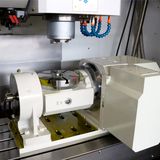
Modern manufacturing demands precision, efficiency, and flexibility in part production. A 5 axis cnc milling machine represents a fundamental shift in how manufacturers approach complex geometries and multi-surface workpiece operations. Unlike traditional three-axis systems, a 5 axis cnc milling machine integrates rotational movement along two additional axes, enabling simultaneous access to multiple surfaces without manual repositioning. This capability transforms production workflows, reduces setup times, and improves dimensional accuracy across intricate components. Industries ranging from aerospace to automotive rely on 5 axis cnc milling machine technology to meet stringent tolerances and deliver competitive manufacturing solutions.
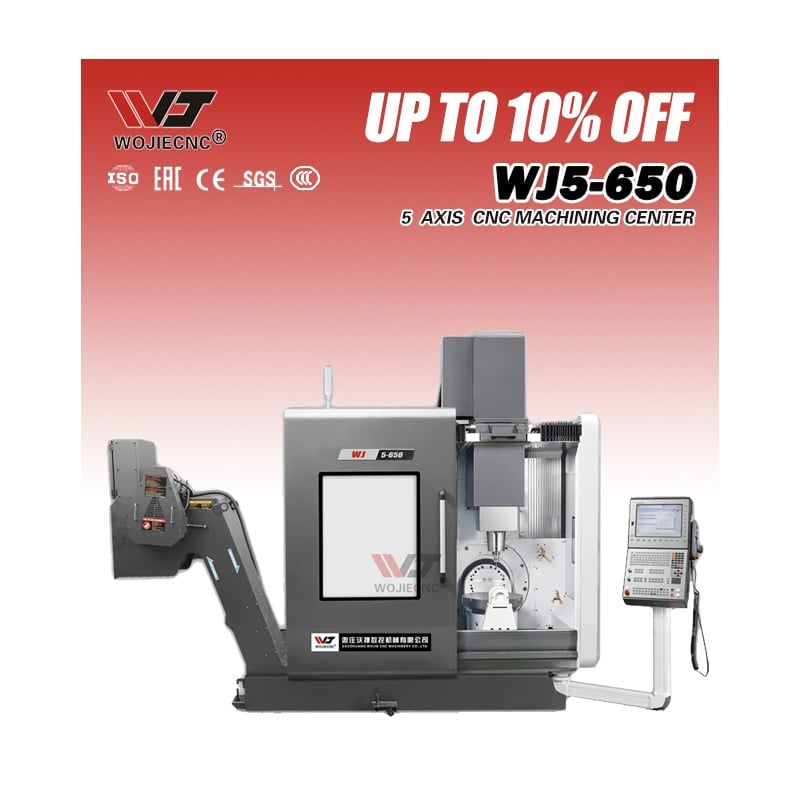
The engineering advantages of a 5 axis cnc milling machine extend far beyond simple surface access. By positioning the cutting tool at optimal angles relative to workpiece surfaces, a 5 axis cnc milling machine reduces tool wear, improves surface finish quality, and minimizes cutting forces. Manufacturers can complete complex parts in a single setup cycle with a 5 axis cnc milling machine, eliminating intermediate operations that traditionally consumed time and introduced positioning errors. This integrated approach makes a 5 axis cnc milling machine particularly valuable for industries requiring high-precision components with tight geometric tolerances and complex surface requirements.
Understanding Multi-Surface Machining with Advanced Capabilities
How a 5 Axis CNC Milling Machine Handles Complex Geometries
A 5 axis cnc milling machine operates along five distinct motion axes: three linear axes (X, Y, Z) and two rotational axes (typically A and B). This combination enables the cutting tool to approach workpiece surfaces from virtually any direction without repositioning the part itself. When machining components with angled surfaces, curved profiles, or intricate cavities, a 5 axis cnc milling machine maintains perpendicular tool orientation relative to each surface. This precision approach prevents chatter, reduces vibration, and delivers superior surface finishes compared to conventional methods. The simultaneous five-axis movement means a 5 axis cnc milling machine can execute tool paths that would require multiple setups on simpler machines, consolidating operations and improving overall efficiency.
Surface Finish Quality and Dimensional Accuracy
A 5 axis cnc milling machine achieves dimensional accuracy within micrometers, a capability essential for aerospace turbine blades, medical implants, and precision automotive components. Because a 5 axis cnc milling machine orients the tool optimally for each surface, cutting forces remain consistent and predictable. This consistency translates directly into repeatable surface finishes and tight tolerances across production batches. Operators programming a 5 axis cnc milling machine can specify exact finish requirements for each surface region, and the machine adjusts feed rates, spindle speeds, and tool angles automatically. The result is parts requiring minimal secondary finishing, reducing downstream costs and improving production throughput.
Multi-Axis Advantages in Production Workflows
Reducing Setup Time and Operational Complexity
Traditional manufacturing workflows often require technicians to reorient workpieces multiple times during production, a practice introducing positioning errors and extending lead times. A 5 axis cnc milling machine eliminates this complexity by accessing all surfaces from a single initial setup. When a 5 axis cnc milling machine is properly programmed and calibrated, it completes entire part profiles without manual intervention. This efficiency becomes especially significant for low-to-medium volume production runs where setup overhead represents a substantial cost factor. A 5 axis cnc milling machine reduces this overhead dramatically, enabling manufacturers to maintain competitive pricing while improving delivery schedules.
Flexibility in Machining Complex Components
Modern design trends push toward integrated component geometry, where multiple functional surfaces merge into single solid parts. A 5 axis cnc milling machine accommodates this complexity with sophisticated tool path planning and real-time axis coordination. Manufacturers using a 5 axis cnc milling machine can accept design specifications that would prove prohibitively expensive on traditional equipment. This flexibility strengthens customer relationships and enables manufacturers to pursue engineering projects that competitors cannot execute. The capability of a 5 axis cnc milling machine to machine angles, curves, and intricate internal features simultaneously positions it as essential infrastructure for innovation-driven industries.
Industrial Applications and Decision Factors
Aerospace and Precision Engineering Use Cases
Aerospace manufacturing stands as a primary beneficiary of 5 axis cnc milling machine technology. Turbine blades, landing gear components, and engine housings all feature complex curved surfaces and tight tolerances that a 5 axis cnc milling machine handles efficiently. Medical device manufacturing similarly depends on 5 axis cnc milling machine capabilities to produce implants, surgical instruments, and diagnostic equipment with biocompatible precision. Automotive manufacturers employ a 5 axis cnc milling machine for high-performance engine components, transmission housings, and suspension parts. In each sector, a 5 axis cnc milling machine reduces waste, improves consistency, and shortens time-to-market for new component designs.
Selecting the Right Machine for Your Production Needs
Choosing a 5 axis cnc milling machine requires evaluating workpiece dimensions, material types, production volume, and required tolerances. A 5 axis cnc milling machine with larger working envelopes suits production of substantial components, while compact 5 axis cnc milling machine models serve shops focusing on small precision parts. Material compatibility matters significantly; a 5 axis cnc milling machine must deliver sufficient spindle power and rigidity to machine aluminum, steel, titanium, and composite materials reliably. Manufacturers should confirm that a 5 axis cnc milling machine candidate includes modern control systems with intuitive programming interfaces and comprehensive tool libraries. The investment in a 5 axis cnc milling machine pays dividends through increased production flexibility, improved part quality, and reduced operational complexity across years of production service.
FAQ
Can a 5 axis CNC milling machine handle all surface orientations simultaneously?
Yes, a 5 axis cnc milling machine accesses surfaces at virtually any angle through coordinated movement of its five axes. The tool approaches each surface perpendicularly, optimizing cutting efficiency and surface finish. This simultaneous multi-surface capability eliminates the need for manual repositioning between operations, completing complex parts in single setups.
What materials can a 5 axis CNC milling machine effectively process?
A 5 axis cnc milling machine machines aluminum, stainless steel, titanium, cast iron, composites, and specialized alloys. The machine's rigidity and precision support consistent performance across material hardnesses and cutting requirements. Spindle power and tool selection should match specific material properties for optimal results with a 5 axis cnc milling machine.
How does a 5 axis CNC milling machine reduce production costs compared to traditional equipment?
A 5 axis cnc milling machine consolidates multiple operations into single setups, dramatically reducing labor time and setup overhead. By completing parts faster with fewer intermediate steps, a 5 axis cnc milling machine lowers per-unit manufacturing costs. Improved surface finish quality also minimizes secondary finishing work, further reducing operational expenses and improving profitability.

