
 EN
EN



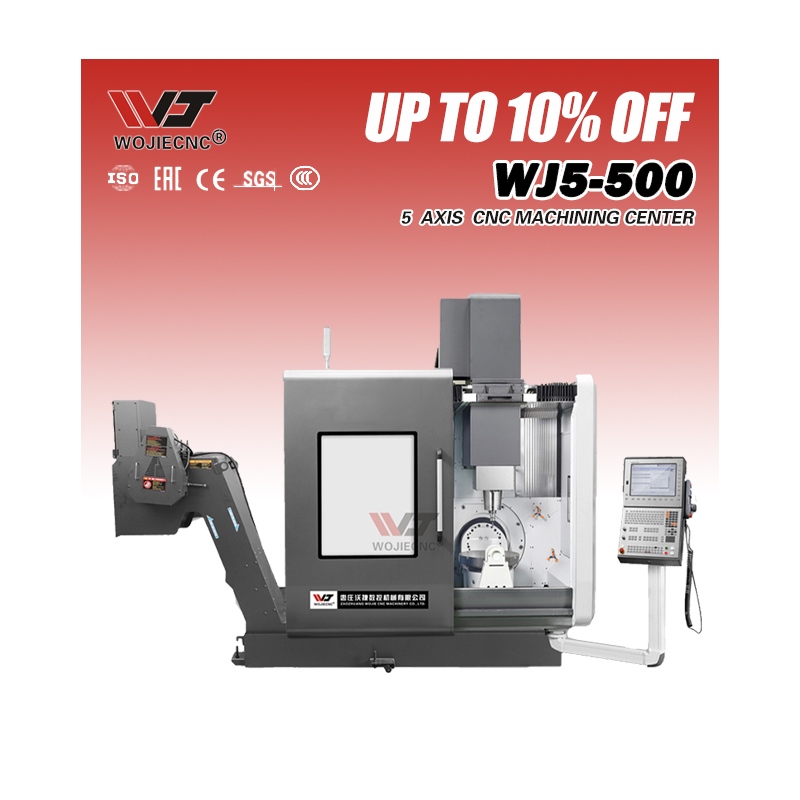
Machining shops operating in today's competitive landscape face constant pressure to deliver complex parts faster and more accurately. A 5 axis cnc milling machine represents a transformative solution that fundamentally changes how shops approach production planning, part positioning, and overall workflow efficiency. Unlike traditional three-axis systems, a 5 axis cnc milling machine enables simultaneous movement across five dimensions, allowing operators to machine complex geometries in a single setup. This capability directly reduces setup time, minimizes part repositioning, and dramatically improves throughput for intricate components that would otherwise require multiple operations on conventional equipment.
For machining shops seeking competitive advantage, integrating a 5 axis cnc milling machine into daily operations unlocks significant productivity gains and quality improvements. The advanced kinematics of a 5 axis cnc milling machine allow shops to consolidate workflows that previously demanded multiple machines, skilled manual labor, and extended lead times. By adopting this technology strategically, shops can reduce costs, improve part accuracy, and build stronger client relationships through faster delivery and superior precision.
Streamlining Setup and Reducing Repositioning Time
Single-Setup Manufacturing with a 5 Axis CNC Milling Machine
One of the most significant workflow advantages of a 5 axis cnc milling machine is the ability to complete intricate parts in a single setup. Traditional three-axis machines require operators to manually reposition parts between operations, which introduces variability and consumes labor hours. A 5 axis cnc milling machine eliminates this inefficiency by allowing the cutting tool to approach surfaces from virtually any angle without repositioning the workpiece. This capability is especially valuable for aerospace components, medical implants, and automotive parts that feature complex surfaces and tight tolerance requirements. Shops report that a 5 axis cnc milling machine can reduce setup time by up to 60 percent compared to sequential operations on multiple conventional machines.
Minimizing Tool Changes and Cycle Time
A 5 axis cnc milling machine consolidates multiple operations into one cohesive workflow, directly reducing the number of tool changes required. When a 5 axis cnc milling machine can access all faces and edges of a part without manual repositioning, operators spend less time managing tool libraries and changing cutters between operations. The integrated workflow enabled by a 5 axis cnc milling machine also allows for optimized tool paths that minimize rapid movements and idle time. For shops running high-volume production batches, the cumulative time savings delivered by a 5 axis cnc milling machine translate to increased capacity and faster order fulfillment without purchasing additional equipment.
Enhancing Precision and Surface Quality
Multi-Angle Cutting Paths for Complex Geometries
A 5 axis cnc milling machine excels at producing parts with complex curved surfaces and intricate features that demand precision from multiple angles. The machine's ability to tilt and rotate the cutting tool independently ensures that each surface receives optimal cutting angles, resulting in superior finish quality and dimensional accuracy. A 5 axis cnc milling machine achieves this through simultaneous five-axis coordination, which allows the tool to maintain ideal feed rates and cutting speeds regardless of surface orientation. Shops utilizing a 5 axis cnc milling machine report measurable improvements in surface finish, often eliminating secondary finishing operations entirely. This precision advantage is particularly critical in industries like aerospace, where even minor surface irregularities can compromise component performance and customer confidence.
Reducing Tolerance Stack-Up and Repeatability
When machining parts on multiple machines with manual repositioning, tolerance stack-up accumulates across setups, making it difficult to hold tight specifications. A 5 axis cnc milling machine eliminates this challenge by machining all features in a single setup under unified coordinate control. The repeatability of a 5 axis cnc milling machine means that parts produced today match those produced tomorrow, building predictability into quality assurance processes. For shops producing components for demanding applications, the consistency delivered by a 5 axis cnc milling machine reduces scrap rates and minimizes the need for expensive rework. This reliability directly impacts customer satisfaction and builds competitive advantage through consistent quality performance.
Optimizing Resource Allocation and Production Planning
Consolidating Machine Requirements and Shop Floor Space
Machining shops frequently struggle with space constraints and the capital investment required to purchase multiple specialized machines. A 5 axis cnc milling machine consolidates the capabilities of several conventional machines into one versatile platform, reducing footprint and capital expenditure. This consolidation benefit of a 5 axis cnc milling machine allows shops to redirect investments toward other operational priorities, such as advanced tooling, workforce training, or automation systems. A 5 axis cnc milling machine occupies less floor space than the equivalent combination of three-axis machines, multiple fixtures, and manual repositioning stations, making it an ideal solution for shops with limited real estate. The space efficiency gained through a 5 axis cnc milling machine enables shops to accommodate growth without major facility expansion.
Enabling Scalable Production Planning
A 5 axis cnc milling machine provides shops with greater flexibility in responding to variable demand and custom job requirements. Because a 5 axis cnc milling machine can handle diverse part geometries and complex specifications, shops can accept a wider range of jobs without purchasing additional equipment. This flexibility translates into more efficient production scheduling and better capacity utilization across the shop floor. Planning teams can load a 5 axis cnc milling machine with back-to-back jobs of different types without significant setup delays or reconfigurations. The adaptive capability of a 5 axis cnc milling machine supports business growth and allows shops to pursue higher-margin custom and specialty work that conventional machines cannot economically produce.
FAQ
How does a 5 axis CNC milling machine differ from traditional three-axis equipment?
A 5 axis cnc milling machine adds two rotary axes to the three linear axes of conventional machines, enabling simultaneous movement across all five dimensions. This simultaneous capability allows a 5 axis cnc milling machine to machine complex surfaces without repositioning the workpiece, whereas traditional three-axis machines require multiple setups and manual reorientation. The advanced kinematics of a 5 axis cnc milling machine result in shorter lead times, improved precision, and consolidated workflows that traditional equipment cannot match.
What types of parts benefit most from a 5 axis CNC milling machine?
Parts with complex geometries, multiple curved surfaces, and tight tolerance requirements benefit most from a 5 axis cnc milling machine. Aerospace components, medical implants, automotive engine parts, and custom prototype work are ideal applications for a 5 axis cnc milling machine. Any component that would traditionally require multiple setups or manual repositioning on conventional machines becomes a candidate for single-setup production on a 5 axis cnc milling machine, delivering faster completion and superior quality.
What is the typical return on investment for a 5 axis CNC milling machine?
The return on investment for a 5 axis cnc milling machine depends on production volume, part complexity, and current workflow inefficiencies. Shops running moderate to high volumes of complex parts typically recover their investment within two to four years through reduced labor, shortened cycle times, and eliminated secondary operations. A 5 axis cnc milling machine also enables shops to command premium pricing for precision work and complex custom components, accelerating the path to profitability and competitive advantage.

