
 EN
EN



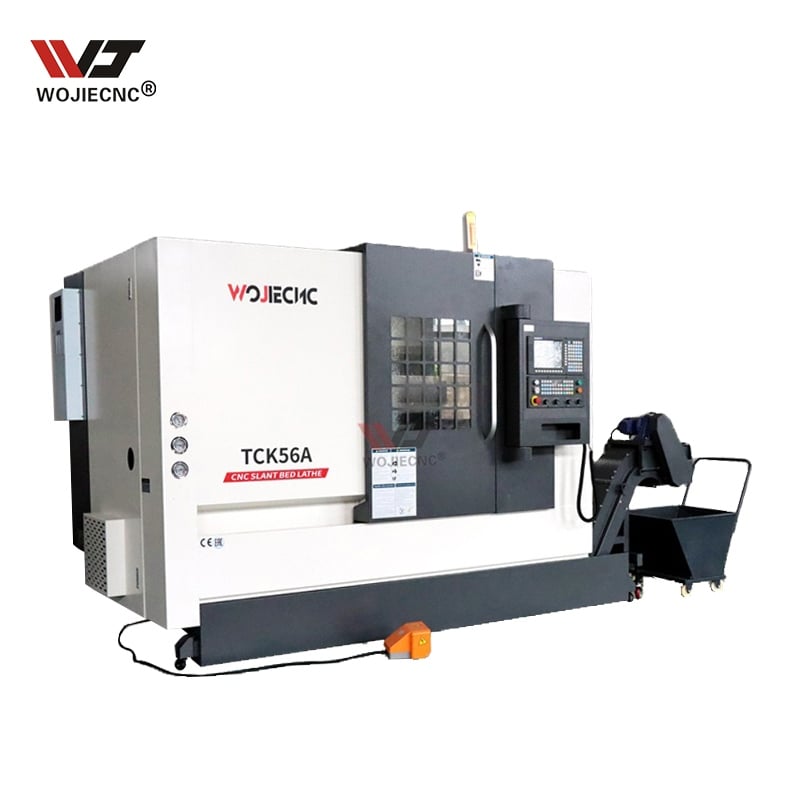
The slant bed CNC lathe has become an essential tool in modern manufacturing facilities worldwide. Unlike traditional horizontal-bed lathes, this machine type features a slanted spindle axis and bed design that fundamentally changes how chips are managed during machining operations. Understanding how a slant bed CNC lathe improves chip removal and machining efficiency helps manufacturers make informed decisions about equipment investment and production optimization. The design innovation of the slant bed CNC lathe addresses critical challenges in metal removal that have long plagued conventional machines.
Chip evacuation directly impacts both machine performance and operator safety on the production floor. When chips remain trapped or flow unpredictably, they can damage precision surfaces, reduce tool life, and create serious workplace hazards. The slant bed CNC lathe solves these problems through its unique geometric configuration, which creates a natural gravity-assisted chip flow pattern. This article explores the mechanical advantages of a slant bed CNC lathe, practical efficiency gains, and why this design has become the preferred choice for high-precision manufacturing environments.
Chip Management Architecture in Slant Bed Design
Gravity-Assisted Chip Evacuation
The defining feature of a slant bed CNC lathe is its angled spindle head, typically positioned between 30 and 45 degrees from horizontal. This angle creates a natural downward chip flow trajectory that works with gravity rather than against it. When cutting tools engage the workpiece, chips are directed away from the spindle and cutting area, falling into collection zones positioned below the machine bed. This passive chip management system significantly outperforms horizontal machines where chips must be manually cleared or re-circulated through complex conveyor systems.
Reduced Chip Nesting and Tangling
A slant bed CNC lathe minimizes chip nesting, a persistent problem where long metal shavings wrap around the spindle, tool holders, or workpiece. When chips nest around rotating components, they create friction, generate heat, and can scratch finished surfaces that require high precision. The angled bed geometry of the slant bed CNC lathe breaks up chip flow patterns that promote tangling. By directing chips downward and away immediately upon formation, the machine prevents the accumulation and re-engagement of material that slows production and compromises surface quality.
Direct Impact on Machining Efficiency
Extended Tool Life and Reduced Maintenance
Proper chip removal is fundamental to tool longevity, and the slant bed CNC lathe excels at this requirement. When chips are evacuated efficiently, cutting tools experience lower thermal stress, reduced vibration, and minimal mechanical damage from chip re-contact. A slant bed CNC lathe maintains cooler cutting zones because chips do not accumulate and re-melt against tool edges. Manufacturers using a slant bed CNC lathe report tool replacement intervals 20 to 40 percent longer than comparable horizontal machines, directly reducing consumable costs and production downtime. The fewer tool changes required means faster cycle times and higher throughput on the same job.
Improved Surface Finish and Dimensional Accuracy
Surface quality depends on stable cutting conditions and minimal vibration during the machining process. When a slant bed CNC lathe evacuates chips cleanly, the cutting tool maintains consistent engagement without interrupted contact caused by chip interference. This stability produces superior surface finishes with tighter dimensional tolerances. Parts machined on a slant bed CNC lathe require less secondary finishing work, reducing total production time and cost. The elimination of chip-induced surface defects means fewer rejected parts and higher first-pass quality rates, which directly improves profit margins on precision jobs.
Operational and Production Advantages
Reduced Machine Downtime and Cleaning Time
Traditional horizontal machines accumulate chips in difficult-to-access areas, requiring frequent manual cleaning and machine stoppage. A slant bed CNC lathe centralizes chip collection in accessible zones below the work envelope, dramatically reducing cleaning frequency and labor costs. Operators can clear the chip pan quickly without disassembling covers or accessing confined spaces. The slant bed CNC lathe design enables operators to maintain the machine during brief production breaks, keeping downtime minimal. Many shops report 15 to 25 percent productivity gains simply from reduced maintenance interruptions when transitioning from horizontal to slant bed CNC lathe operations.
Faster Cycle Times and Higher Production Capacity
When a slant bed CNC lathe evacuates chips efficiently, programmers can optimize cutting parameters more aggressively without risk of chip jamming or tool breakage. Feedrates and spindle speeds can be increased safely, shortening cycle times significantly. A slant bed CNC lathe also allows continuous production runs without manual intervention, enabling overnight and unmanned machining operations. This capability transforms a slant bed CNC lathe into a revenue-generating asset that operates beyond standard working hours. Production capacity increases without additional floor space investment, making a slant bed CNC lathe an economically efficient choice for job shops and high-volume manufacturers alike.
Advanced Features Supporting Efficiency
Integrated Coolant Flow and Chip Separation
Modern slant bed CNC lathe systems incorporate internal coolant channels positioned along the angled bed to support chip evacuation further. Coolant delivered through optimized nozzles flushes chips away from cutting edges while the slant geometry moves material downward. This integration means a slant bed CNC lathe with proper coolant management removes swarf continuously without buildup. The combination of gravity-assisted flow and coolant channeling ensures a slant bed CNC lathe maintains peak performance even during high-speed roughing operations that produce massive volumes of chips.
Compatibility with Automated Chip Handling
A slant bed CNC lathe works seamlessly with automated chip conveyors and collection systems because chips flow predictably into designated zones. This predictability eliminates jamming risks that plague horizontal machines connected to conveyor systems. Manufacturers integrating a slant bed CNC lathe into lights-out machining cells benefit from reliable, consistent chip flow that enables the system to operate unattended for extended periods. The slant bed CNC lathe becomes part of an efficient production ecosystem where chip removal is automated, monitored, and optimized for maximum availability.
FAQ
Does a slant bed CNC lathe require more frequent maintenance than horizontal machines?
No. A slant bed CNC lathe typically requires less frequent maintenance because chips are removed more efficiently and do not accumulate in critical areas. The simpler chip evacuation reduces stress on spindle bearings and reduces the need for protective cover cleaning. Most operators find maintenance schedules for a slant bed CNC lathe are actually shorter than comparable horizontal alternatives, translating to lower ownership costs.
Can a slant bed CNC lathe handle all material types and grades?
Yes. A slant bed CNC lathe machines steel, aluminum, brass, cast iron, and exotic alloys effectively. The chip removal advantages of a slant bed CNC lathe benefit all materials equally because the design improves evacuation regardless of chip type. Different materials produce different chip characteristics, but the angled bed configuration of a slant bed CNC lathe adapts to each seamlessly.
What production scenarios benefit most from a slant bed CNC lathe?
A slant bed CNC lathe delivers maximum advantage in high-volume production, continuous machining operations, and precision-critical work. Job shops that run diverse parts with long cycle times also gain significant efficiency from a slant bed CNC lathe because uptime and tool life directly impact profitability. Any operation that cannot afford downtime for chip removal or tool replacement will benefit substantially from investing in a slant bed CNC lathe.

